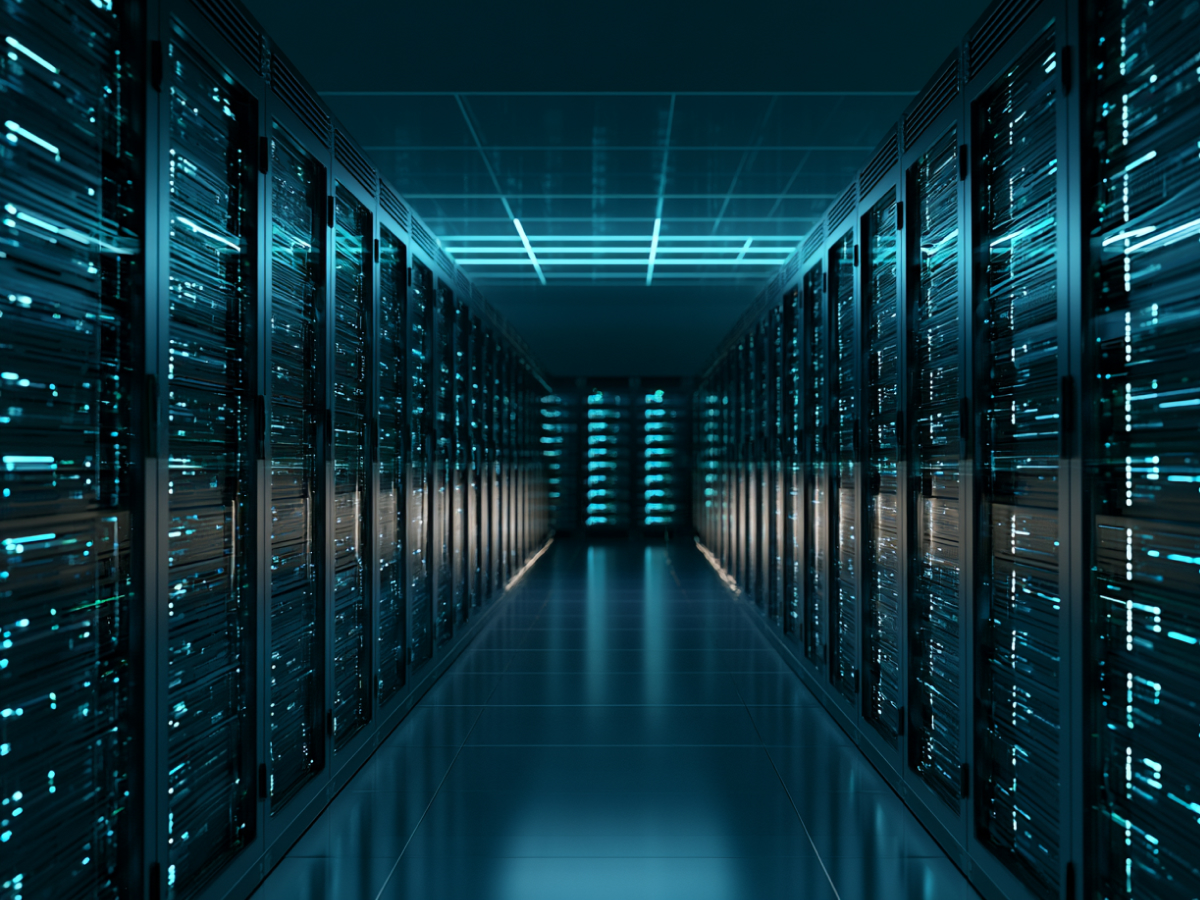
Mainframes remain integral to global enterprise operations
The mainframe is not a relic of the past. It is a precision system running quietly behind the world’s biggest industries. Most large-scale transactions you make, whether booking a flight, moving money, or paying taxes, are powered by mainframes. They keep the global economy running while consuming only a small part of total IT spending. Executives who think of them as outdated are missing where true stability and transaction strength still live.
Alessandro Galimberti, Vice-President Analyst at Gartner, put it clearly: every major digital transaction connects back to a mainframe. IBM’s data backs this up, mainframes handle 87% of all transactions worldwide and are used by 44 of the top 50 banks and retailers. Those numbers alone show that mainframes are not going anywhere. And the perception is shifting fast. The 2025 BMC mainframe survey found that 97% of enterprises view the mainframe as a long-term platform or a platform for new workloads, the strongest result in the survey’s twenty-year history.
A decade ago, the tech industry was laser-focused on moving away from mainframes. That conversation has flipped. It’s no longer about abandoning the technology, it’s about building around it. As Kamal Matta, Assistant Vice-President of IT and Security at Sonic Biochem Extractions, explained, today’s discussions are about integration. For business leaders, that shift means recognizing the mainframe as an essential foundation.
Business continuity and reliability define enterprise success. Mainframes deliver that, without compromise. For C-suite executives, the lesson is simple: this platform still anchors the digital economy, and it’s prepared to evolve alongside new computing paradigms. Betting against it means underestimating the infrastructure behind the world’s most critical data flows.
Modernization over replacement defines mainframe strategy
The new strategy isn’t “get rid of the mainframe.” It’s modernize what already works. Leaders are realizing that replacing legacy mainframes with unproven large-scale alternatives is often a mistake. The smarter move is modernization, embedding new technologies, APIs, and cloud integration into the existing, dependable system. The result is speed, agility, and lower risk.
Manoj Gupta, Vice-President of IT at Restaurant Brands Asia, described it well: mainframes bring unique compatibility across generations. They can run decades-old applications and still connect to new tools and AI systems. That dual capability is rare. Rahul Rao, Distinguished Engineer at IBM India Systems Development Lab, added that trying to migrate or rebuild massive monolithic applications off mainframes often costs tens of millions of dollars. These efforts also come with high failure rates and performance loss. For most organizations, the ROI simply doesn’t justify the risk.
Modernization instead allows organizations to streamline processes and unlock value in existing infrastructure. By updating around the mainframe, businesses benefit from time-tested reliability paired with new innovation layers, without halting operations. It’s a model focused on reducing technical debt while keeping systems robust and compliant.
For executives, this approach means prioritizing strategic, incremental upgrades over disruptive rewrites. It safeguards data integrity, reduces long-term operational risk, and delivers greater financial efficiency. Modernizing around the mainframe minimizes uncertainty and positions the enterprise to adapt faster as technology evolves.
In simple terms, modern mainframes are not holding businesses back, they’re carrying forward decades of investment into a more connected, AI-ready future.

A project in mind?
Schedule a 30-minute meeting with us.
Senior experts helping you move faster across product, engineering, cloud & AI.
Architectural efficiency and openness provide a competitive edge
Mainframes were engineered for precision. Their architecture is optimized for extreme transaction volumes and large-scale data processing. Ross Tisnovsky, Partner at Everest Group, explained that the key strength lies in how mainframes handle input and output, offloading these tasks to dedicated peripheral processors. This design enables mainframes to process thousands of concurrent operations with minimal latency, maintaining efficiency at scale.
Another factor driving their resilience is openness in data handling. Mainframes don’t restrict how data moves in or out. That flexibility stands in sharp contrast to many cloud and SaaS platforms that impose access limits or API restrictions. Tisnovsky mentioned that SAP changed its global API policy to limit third-party AI connections, while mainframes remain open to broad interaction. This openness makes them particularly adaptable to modern technologies.
IBM has endorsed this direction. Alessandro Galimberti, Vice-President Analyst at Gartner, noted that the company continues developing new data integration interfaces to align mainframes with modern API-driven systems. This lets enterprises run both legacy and modern applications within the same ecosystem, maintaining performance continuity while offering the extensibility executives now demand.
C-suite decision-makers should view mainframe architecture as a long-term performance asset. The platform’s strength is about efficiency and scalability proven across global industries. Mainframes enable continuous, high-volume data processing without introducing system fragility or access limits. For executives focused on operational consistency, this kind of structural efficiency directly supports growth and digital agility.
Integrated Quantum-Safe design and AI capabilities enhance relevance
The modern mainframe isn’t just an old system maintained for stability, it’s evolving for the future. Quantum security and AI integration have pushed mainframes into a new era of relevance. Alessandro Galimberti from Gartner pointed out that mainframes were “quantum-safe” long before the term became an industry talking point. Their encryption frameworks were designed to withstand emerging computational threats. Ross Tisnovsky confirmed that most modern IBM mainframes already meet post-quantum cryptography (PQC) standards, keeping critical data secure for the next generation of computing.
At the same time, AI is now embedded at the hardware level. Rahul Rao, Distinguished Engineer at IBM India Systems Development Lab, explained that modern mainframes support real-time analytics and AI inference directly within transactional processing. Instead of transferring sensitive data elsewhere for analysis, the system runs AI where the data already resides. This enables live insights and immediate decision-making while maintaining strict data governance.
Kamal Matta, Assistant Vice-President of IT and Security at Sonic Biochem Extractions, highlighted this capability with the IBM z17 mainframe. The system’s AI accelerators allow banks and insurance companies to execute advanced models for fraud detection and credit-risk evaluations on active transactions, instantly and without delay.
For executives leading data-driven enterprises, quantum safety and on-chip AI matter deeply. These features ensure both protection and speed, reinforcing trust in mission-critical systems. They eliminate data exposure risks associated with external processing while providing the real-time intelligence that modern business operations demand.
The message is clear: mainframes have moved beyond their legacy identity. They are now purpose-built for this next stage of computing, where secure data handling and integrated AI define success.
Economic and hardware advantages sustain cost competitiveness
Mainframes hold a strong position in enterprise economics. While the upfront cost can appear high, the total cost of ownership often proves competitive when measured against uptime, data throughput, and system longevity. Manoj Gupta, Vice-President of IT at Restaurant Brands Asia, underscored that mainframes consistently deliver zero downtime and strong operational efficiency, making them an economical choice for organizations managing massive transaction volumes.
Another advantage lies in hardware stability. Alessandro Galimberti, Vice-President Analyst at Gartner, noted that IBM’s vertical control of its supply chain gives it better pricing consistency than GPU suppliers. In today’s market, where AI infrastructure costs fluctuate daily due to GPU pricing, predictability is valuable. For enterprises running mission-critical workloads, stable pricing and long hardware life cycles directly translate into more manageable capital planning.
This economic framework fits long-term strategies. Companies that depend on continuous, large-scale transaction processing gain measurable cost benefits from mainframes’ capacity to operate without interruption. The combination of stable hardware pricing, minimal downtime, and low maintenance contributes to a favorable cost-performance ratio that few modern systems can match.
Executives evaluating technology budgets should take the full lifecycle into account. While mainframes demand significant initial investment, their sustained performance and low failure rates ensure operational savings over time. Leaders focused on cost predictability and infrastructure stability will continue to find mainframes an efficient option, especially for high-demand data environments.
Talent scarcity and vendor lock-in pose ongoing challenges
The durability of mainframes introduces a different problem, people. The number of engineers proficient in core languages such as Cobol is shrinking. Ross Tisnovsky, Partner at Everest Group, warned that retiring specialists and limited new entrants have created a “massive premium” for Cobol expertise. Without a skilled talent base, maintenance and innovation cycles could slow, raising operational and cost risks across industries that rely on these systems.
Vendor concentration is the second challenge. IBM’s dominance means most enterprises that rely on mainframes remain tied to its ecosystem. Alessandro Galimberti, Vice-President Analyst at Gartner, referenced this directly, noting that every organization has some degree of technology lock-in within its IT stack. Where that dependency sits, deep in infrastructure or higher up in application layers, determines strategic flexibility.
Both issues weigh heavily on long-term planning. The scarcity of specialized skills can limit modernization speed, while reliance on one vendor can constrain strategic options. However, training initiatives and internal reskilling programs are beginning to address the skills gap. Meanwhile, hybrid IT strategies are providing some relief by introducing modular architectures to reduce dependency on any single vendor.
For executives, these challenges demand proactive responses. Talent renewal is not optional, it is essential to maintaining operational stability. Companies should also pursue diversification within hybrid systems to manage exposure to vendor lock-in. Addressing these two concerns early ensures the enterprise remains agile, scalable, and in control of its technology roadmap rather than dependent on external conditions.
AI adoption reinforces mainframe investment
AI is strengthening the case for mainframes rather than making them obsolete. Enterprises are using AI to enhance the capabilities of mainframes, bringing intelligence directly to the data instead of moving data into less secure or slower environments. This trend reflects a pragmatic approach focused on maintaining control, speed, and accuracy within critical operations.
Alessandro Galimberti, Vice-President Analyst at Gartner, explained that attempts to leave the mainframe environment often fail both financially and operationally. He noted that a typical “mainframe exit” costs between $20 million and $40 million, and usually results in new complications instead of savings. The cost and disruption seldom make business sense for high-value, data-centric organizations. AI integration, on the other hand, gives these same systems renewed strength by automating insight generation directly within ongoing transactions.
IBM’s Rahul Rao, Distinguished Engineer at the India Systems Development Lab, highlighted that AI integration on mainframes allows organizations to run inference and predictive analysis on critical data without transferring it externally. This reduces latency, improves governance, and ensures compliance. Kamal Matta, Assistant Vice-President of IT and Security at Sonic Biochem Extractions, pointed to the IBM z17 system, which provides built-in AI accelerators enabling real-time fraud detection and algorithmic credit-risk assessments during live transactions.
For C-suite leaders, the takeaway is clear. Mainframes remain essential for handling the world’s most important data sets, and AI is elevating their value. Integrating AI functions directly into mainframe operations reduces risk and delays while increasing speed and decision accuracy. When critical information never leaves its core environment, security improves and total system efficiency increases. Investing in mainframes today aligns directly with secure, scalable AI growth.
Future viability hinges on skills renewal and continued adaptability
The next phase of mainframe evolution depends on people as much as technology. Alessandro Galimberti, Vice-President Analyst at Gartner, said, “IBM’s ability to fix this gap will decide the future of the platform.” His point is vital, success will hinge on modernizing not only systems, but the skills surrounding them. The pace of innovation within mainframe environments will depend on how quickly enterprises can reskill engineers and attract new talent.
Rahul Rao, Distinguished Engineer at IBM India Systems Development Lab, noted that modernization is already advancing across codebases and data architectures. But sustaining this progress requires fresh expertise capable of blending legacy and modern techniques. Continuous adaptation is now a core expectation, not an optional strategy.
This emphasis on human capital ensures that the mainframe remains a living part of enterprise computing rather than a static relic. Companies that invest in dedicated training programs and partnerships focused on skills renewal will maintain the advantage, preserving reliability while accelerating innovation.
Executives need to take a decisive stance on talent and adaptability. Technology assets cannot perform without the human expertise to manage, enhance, and innovate them. Developing new technical capacity internally, while fostering collaboration with educational and vendor programs, ensures the mainframe landscape continues to evolve. Those willing to build this foundation will find their organizations ready for the next generation of secure, high-performance computing.
The bottom line
Mainframes aren’t old technology holding companies back, they’re a foundation evolving to meet new demands. As AI, quantum computing, and data security redefine business priorities, the mainframe has quietly adapted to lead once again. Its combination of reliability, power, and integration potential places it in a category few systems can reach.
For executives, the priority now is strategic alignment. Modernization efforts that merge mainframe stability with next-generation tools will deliver the greatest return. But success will depend on something less technical: talent. Building the next wave of mainframe expertise will ensure that decades of investment continue to pay forward into an autonomous, AI-enabled future.
The data is clear and so is the direction. The mainframe remains the anchor of global enterprise computing. With the right leadership and vision, it won’t just keep pace with change, it will help define what comes next.

A project in mind?
Schedule a 30-minute meeting with us.
Senior experts helping you move faster across product, engineering, cloud & AI.