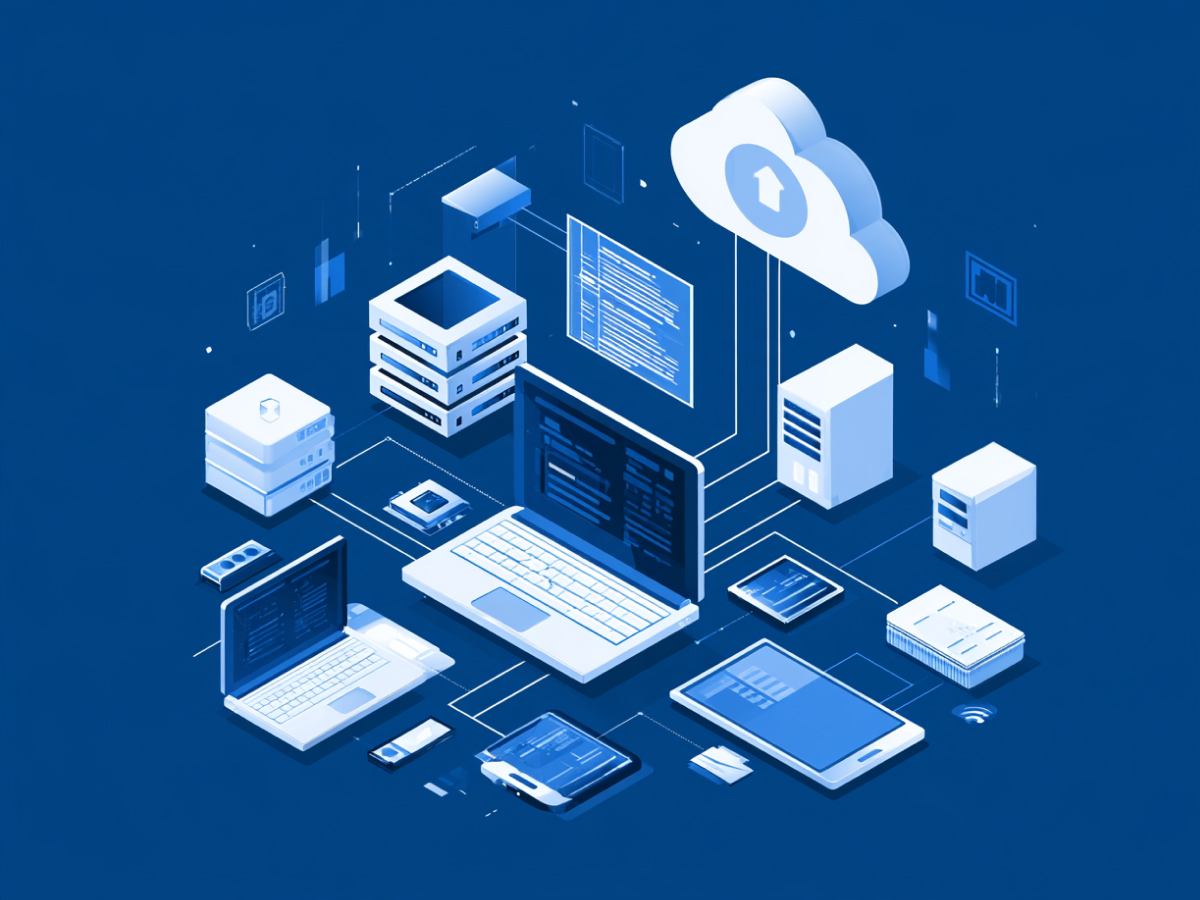
Autonomous marketing creates a security problem before any individual tool fails: autonomous profiles can continuously send data among platforms as they analyze audiences, refine messaging and execute campaigns. That communication increases operational velocity because fewer transfers need a person to initiate them, but it also increases the number of places sensitive information can move. For MOps leaders, the useful security question shifts from whether each tool is trustworthy to what each tool can see, where its data can go and what limits exposure when one connection is compromised.
Autonomous marketing’s security problem starts between the tools
The risk grows from how an automated marketing stack works as a connected system. Multiple autonomous profiles can exchange payloads as one operation feeds another, allowing audience analysis to influence targeting and messaging without repeated manual handoffs. Each transfer creates another point where data leaves one security context and enters another, so faster coordination comes with a larger attack surface.
That larger attack surface makes the boundaries between tools as important as the tools themselves. A system can contain applications an organization has approved individually while still allowing information to travel farther than a particular task requires. Security decisions consequently have to cover how data moves through the stack: which autonomous entity receives it, which endpoint processes it, what remains there afterward and which other systems that entity can reach.
The integration layer has become part of the security perimeter
Those boundaries matter because a payload crossing separate platforms may contain materially different classes of sensitive information. Marketing workflows can involve personally identifiable information (PII), proprietary corporate strategy and internal financial metrics. When those fields travel together through autonomous workflows, the permissions attached to the integration determine which systems can access them and how far they can move.
External models add another boundary to the same path because information can leave the organization’s environment. That information can reach models operating under policies that permit supplied data to be used for public training purposes. A strategic brief or financial field that was legitimate input inside one internal process could consequently face different exposure when an autonomous workflow passes it to an external endpoint.
That external boundary expands what the security perimeter has to cover. Conventional SaaS controls such as passwords govern access to an application, while vendor terms set conditions for the relationship with its provider. Autonomous software can still move data across separate network nodes after those controls are satisfied, so integrations require security architecture that governs what can cross each boundary and what happens afterward.
Those integration controls have to operate on the data path itself because a password cannot decide whether an outbound prompt should contain a customer’s phone number. General vendor terms also leave a separate question: how much of the organization’s connected environment should an autonomous entity be allowed to reach? MOps teams consequently need controls over both the data moving between systems and the permissions of the entities moving it.

A project in mind?
Schedule a 30-minute meeting with us.
Senior experts helping you move faster across product, engineering, cloud & AI.
Engineer boundaries at four different points in the data path
Once the data path becomes part of the perimeter, security has to place boundaries where exposure can occur. The proposed architecture combines centralized validation and tokenization, localized governance and retention controls, strict access permissions, and isolated computation. Each control acts at a different stage of processing, so each addresses a separate part of the trust model.
Those stages begin with the information allowed to leave the organization’s environment. Retention requirements then govern what an external service can keep after legitimate processing, while access scopes determine what each autonomous entity can retrieve in the first place. For workloads requiring stronger separation, isolated computation keeps execution within infrastructure controlled by the organization. The architecture therefore constrains data before transmission, after external processing, during internal retrieval and at the location of execution.
Minimize the raw data that leaves your environment
The first boundary applies before a customer segment or strategic brief reaches an autonomous model. MOps teams can route the payload through a centralized, server-side security proxy that scans outgoing text for protected fields. The scan can identify email addresses, phone numbers and corporate revenue information before the receiving system can process those values.
When the proxy finds protected information, it substitutes randomized tokens or generic placeholders for the sensitive values. The autonomous system can then analyze relevant patterns and generate content variations from the transformed payload without receiving the underlying raw customer information. The decision about data exposure therefore happens inside the organization’s environment before transmission, placing control where the data crosses the boundary.
That outbound control implements a broader data-minimization rule: transmit the smallest amount of raw information required for the task. The rule is especially relevant when a marketing workflow has assembled rich customer or business context even though the next autonomous operation needs only part of it. Removing unnecessary sensitive values at the outbound boundary reduces what an external endpoint could expose, retain or use for another purpose.
Data minimization also separates outbound exposure from internal access. One security decision concerns what information an autonomous workflow can retrieve inside connected systems; another concerns what information may leave the organization after retrieval. Tokenization handles the outbound decision, while access controls govern retrieval. Between those stages sits another boundary: what an external service does with data it legitimately receives.
Make external processing temporary
Because some useful processing still requires text and context to reach a vendor endpoint, the next boundary concerns how the vendor handles received data. Marketing teams need to audit the data-handling policies of every external application connected to the automated pipeline so retention behavior becomes an explicit part of deployment. That review determines whether information needed for processing can persist after the task ends.
For operational data routed through those endpoints, contracts and configuration settings can require zero-data-retention parameters. Under that policy, an external engine uses the supplied text and context for real-time processing and then purges them from its servers. The external service remains part of the workflow, while the intended processing lifecycle ends when the supplied data is purged.
That retention boundary is designed to prevent proprietary information from being incorporated into public training sets. Its protection depends on the enforced retention policy and the vendor endpoint operating according to it, so zero retention still represents a trust relationship with an external provider. The policy defines what that provider is permitted and configured to do with supplied information after processing.
Because zero retention still relies on an external provider, it creates a different trust model from computation inside infrastructure the organization controls. Zero-data-retention API policies allow an external system to receive data temporarily under defined handling requirements. Private deployment, discussed below, moves the processing location itself. Before making that larger architectural change, however, the organization can reduce exposure further by limiting what each autonomous entity can retrieve.
Limit what every autonomous entity can reach
That retrieval boundary operates before data reaches an outbound proxy or vendor. Role-based access control sets authorization boundaries for each autonomous entity according to its operational task, using the same least-privilege principle used when assigning restricted database permissions to employees. Least privilege means granting an entity only the access its assigned function requires, which limits the information available to any single automated component.
Consider a hypothetical agent responsible for drafting email copy. Its task does not require access to raw customer billing databases or master financial summaries, so granting those permissions creates exposure without helping it produce the email. If its credentials, application or connection were compromised, unnecessarily broad permissions would also increase how much of the integrated environment could become reachable.
Distinct API access scopes provide the technical boundary for those permissions. Operations leaders can configure a separate scope for every automated entity so an email-focused profile, a data-analysis profile and other autonomous components reach only the resources assigned to their functions. The intended containment effect is that compromising one application cannot automatically propagate across the rest of the integrated database architecture.
Those permission boundaries complement the earlier outbound controls because they act at different stages. Least privilege reduces what an autonomous entity can reach inside connected systems, while outbound filtering reduces the sensitive content that can cross an organizational boundary. A tightly scoped profile could still send sensitive information when its legitimate scope includes that information, while a tokenization proxy leaves unnecessary database access untouched. Both decisions require independent controls.
For the most sensitive workloads, change the trust model entirely
Even with retrieval, minimization and retention boundaries in place, some marketing operations may classify the remaining external-processing risk as unacceptable. For those highly sensitive workloads, multi-tenant public-cloud endpoints can be removed from the path by deploying open-source or proprietary models inside an organization’s isolated virtual private cloud (VPC), a logically separated cloud network controlled by that organization. The processing location then becomes part of the security boundary.
With an isolated deployment, data exchanges, segment analyses and content-orchestration tasks remain inside the organization’s managed firewall. The organization also gains visibility and control over data-access logs within that environment. Private-cloud model isolation therefore changes the underlying trust arrangement because sensitive processing stays inside infrastructure governed by the organization throughout execution.
That change supports operations for which an organization determines that public multi-tenant endpoints create unacceptable risk. It also completes the architecture at the execution layer: the earlier controls restrict retrieval, outbound content and external persistence, while isolation governs where selected computation occurs. When autonomous software can initiate transfers across network nodes without a person approving every movement, encoding these limits in infrastructure allows the system to operate within boundaries established before execution.
The bottom line
Autonomous marketing changes the security problem from protecting individual applications to governing an interconnected system. As software gains the ability to retrieve information, move it between platforms and initiate processing without manual approval, the architecture around those actions becomes a business control rather than a purely technical concern.
For executives, the priority is not to eliminate autonomous workflows but to define how much trust each workflow receives. That means limiting what autonomous entities can access, minimizing the sensitive data that leaves the organization, enforcing clear retention requirements with external providers and keeping the most sensitive processing inside controlled infrastructure when necessary.
The organizations that establish these boundaries before expanding autonomous marketing will be better positioned to increase automation without expanding exposure at the same rate. Security becomes part of how autonomy is designed and scaled, rather than a control added after data is already moving across the stack.

A project in mind?
Schedule a 30-minute meeting with us.
Senior experts helping you move faster across product, engineering, cloud & AI.