Observability bridges the gap between distributed system complexity and operational clarity
In modern digital systems, complexity grows faster than visibility. As companies move from simple monolithic platforms to distributed and composable architectures, the old approach to monitoring no longer works. Observability fills that gap. It gives leaders visibility across every part of the system, linking what users experience with the underlying microservices, APIs, and infrastructure that make it work. Instead of guessing what went wrong when something fails, your team can trace each event end-to-end, identifying precisely where an issue occurred and fixing it before customers notice.
Faster detection means faster recovery, which protects the brand, customer trust, and revenue. The shift from traditional monitoring to true observability transforms operations from reactive to proactive. When executives have real insight into how their technology performs in real conditions, they can make better decisions about scaling, resource allocation, and system improvements without relying on assumptions.
For companies operating in fast-paced digital markets, observability ensures reliability and continuity, two of the most valuable forms of competitive advantage. It’s the difference between reacting to breakdowns and steering your platform with confidence based on real-time truth instead of lagging indicators.
Observability architecture relies on five interconnected layers to provide full visibility
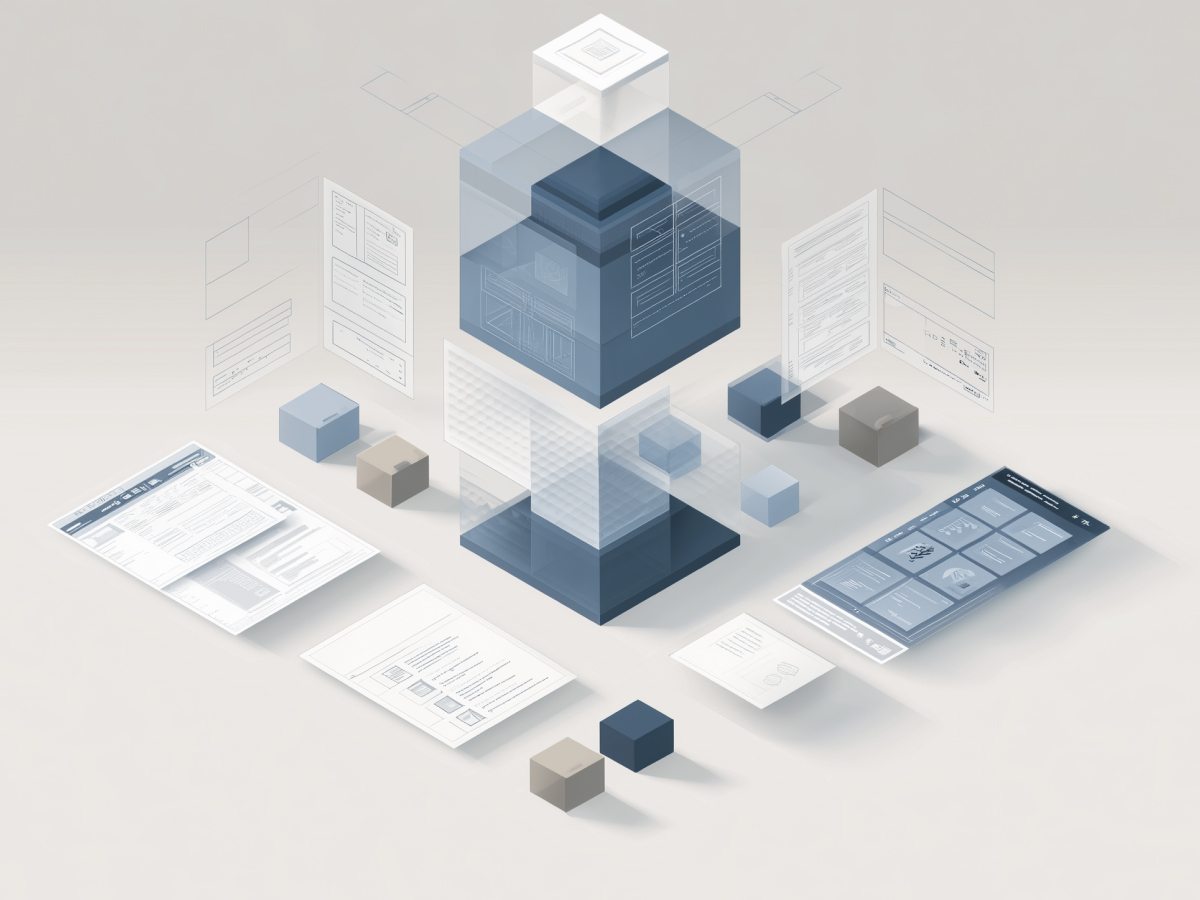
A strong observability system runs on five layers that work as one framework. Each layer has a purpose, and together they build complete visibility into complex systems. The first layer, telemetry producers, captures data from every point in the system: APIs, web applications, databases, and cloud workloads. That data then moves through the telemetry pipeline, where it’s cleaned, enriched, and organized for analysis. This process ensures every event and metric carries clear context, making later analysis accurate and actionable.
Telemetry consumers, such as application monitoring and security tools, take this processed data and turn it into insights. They can identify performance drops or predict potential failures before they hit users. The analytics layer then goes a step deeper, using algorithms, policy models, and machine learning to connect patterns across multiple systems and surface real root causes. At the top, the visualization layer turns complex data into clear, interpretable dashboards that anyone, from engineers to executives, can use to make informed decisions.
For executives, the value here is modular control. Each layer can scale independently, giving organizations flexibility as they expand. This structure prevents costly system overhauls when business demands grow. It aligns technology investment with outcomes, solving operational issues today while preparing for tomorrow’s growth. When a company understands each layer and keeps them aligned, it doesn’t just gain observability; it gains reliability, adaptability, and long-term efficiency.
Headless architecture introduces decoupled failure modes unseen in monolithic systems
Headless architecture separates the frontend and backend to enable speed, flexibility, and modular design. But with that separation comes new patterns of system failure. In a monolithic setup, everything operates in one place, so identifying where a failure starts is straightforward. Headless systems change that equation. Different frontends, web, mobile, kiosks, or voice, communicate through APIs with independent services. When something fails, each part might look healthy in isolation, even while user experience declines.
This disconnect can create costly blind spots. A payment service may show 99.9% uptime, yet checkout completion rates drop. The problem might not be the payment gateway itself but the API interaction or the way the frontend handles timeouts. Without observability across every connection point, teams only see partial truths. That’s why headless systems demand monitoring beyond individual components, they need insight into how services work together to serve the customer.
For executives, the message is clear: success in headless commerce isn’t just about flexible design or speed to market. It’s about reliability and accountability across distributed parts. Observability ensures that decoupled systems behave as one unified ecosystem. By tracking the full user journey across APIs, events, and data flows, leaders can spot issues early, reduce conversion loss, and maintain consistent customer experience across all channels.
Debugging distributed systems reveals operational silos and misaligned metrics
Distributed architectures often mirror organizational structures. Frontend, backend, and infrastructure teams run different tools and measure different things. Each team may believe their area performs well, yet the overall performance can still fail. This fragmentation delays problem resolution. When one part of a checkout process breaks, for example, separate monitoring tools prevent teams from quickly aligning on the root cause. Valuable time is lost switching between dashboards, comparing logs, and manually correlating events.
Unified observability eliminates this inefficiency. By consolidating all telemetry, logs, metrics, and traces, into a single, correlated view, organizations move from siloed troubleshooting to coordinated action. This unified perspective ensures everyone operates from the same data set, improving accuracy and reducing finger-pointing between teams. It also boosts productivity, minimizing downtime and resource waste during incidents.
For a C-suite audience, this isn’t only about technical optimization. It’s about operational excellence and cost control. Disconnected toolchains and misaligned metrics increase operational friction, inflate maintenance costs, and can compromise customer trust. When systems and teams share a consolidated view of performance, business decisions align faster and with greater confidence. Observability brings not only clarity but also accountability across technical and organizational boundaries.
Composable architectures create invisible dependency webs beyond traditional monitoring
Composable architectures promise flexibility and speed by breaking systems into smaller, interconnected components. Each service communicates through APIs, event streams, and databases. While this design promotes scalability, it also multiplies dependencies that traditional monitoring cannot easily track. Failures often travel through chains of services without a clear origin, leading teams to spend more time searching for issues than fixing them.
True observability exposes these hidden dependencies. It follows data as it flows through connected services, integrating telemetry from every part of the system to create a coherent picture. This interconnected view lets teams see how one small change or delay in a single service can impact the overall user experience. It moves organizations away from isolated monitoring and ensures every event, request, and process is understood in context.
For executives, the value lies in predictability and resilience. When dependency chains are transparent, leaders can make smarter decisions about performance investment, vendor management, and system design. This visibility also lowers operational risk by revealing weak links before they cause outages or losses. Composable systems succeed only when the organization can observe them as unified operations rather than fragmented parts.
Asynchronous and Event-Driven workflows severely limit traceability
In distributed environments, asynchronous workflows enable high performance and responsiveness. But they also complicate visibility. Unlike sequential processes, async systems don’t follow a single request path from start to finish. Events can trigger multiple processes running across different timelines, servers, or data centers. Without correlation data, connecting the dots between these actions becomes nearly impossible.
Conventional logging solutions fail to reveal the complete picture in these environments. Context can be lost due to timestamp drift, inconsistent data formats, and missing correlation identifiers. The result is operational uncertainty, teams see fragments of evidence without understanding the originating user action. Effective observability tools must bridge this gap by maintaining context across asynchronous interactions. They do this through structured tracing and intelligent data propagation, ensuring each event can be linked back to its root cause.
For business leaders, this challenge has financial and reputational implications. When tracing breaks down, issue resolution slows, and the reliability of business-critical applications drops. Customers experience delays or transaction failures, which translate directly into lost trust and revenue. To prevent this, executives must prioritize observability strategies that synchronize event data across distributed systems, ensuring that every asynchronous workflow remains transparent, measurable, and accountable.
Webhooks and queues illustrate hidden reliability and observability challenges in async systems
Webhooks and message queues are essential components in modern architectures, yet they introduce their own risks. Webhooks push data based on external triggers, often without regard for the receiving system’s load or readiness. During heavy traffic periods, this leads to delays, lost data, or duplicate processing. Queues help by adding buffering between systems, but they also make event tracing more complicated. Without proper observability, teams can’t identify where a request stalled or why it failed.
Real-world data confirms these risks. One organization reported a 12% webhook processing failure rate during peak traffic. Average message handling times were 3.2 seconds but spiked to 23 seconds at the 99th percentile. Worse, it took an average of 23 minutes to detect the issue. Problems like that can’t be fixed without full visibility into how asynchronous processing actually behaves under pressure.
An effective solution starts with structured observability built into every webhook and queue interaction. Tracking message IDs across systems, monitoring performance at each step, and capturing delivery confirmations create a reliable data trail. Dead-letter queues and persistent storage add further assurance by retaining failed events for later review and recovery.
For executives, this level of context prevents revenue loss and operational surprises. It ensures that transactional systems continue to function smoothly, even under heavy demand. Investing early in this kind of observability reduces incident impact, improves mean time to recovery, and protects both customer experience and business continuity.
Distributed checkout flows expose the limits of traditional tracing
Distributed checkout processes highlight where traditional tracing systems break down. In headless commerce, each stage of the transaction, from A/B testing and payment authorization to inventory updates and order creation, may occur in separate services owned by different teams. Each part can function correctly, yet the business outcome may still fail if observability doesn’t extend across the entire workflow.
To maintain continuity, modern tracing solutions must carry context across asynchronous boundaries. OpenTelemetry provides a standardized approach to propagate metadata, often referred to as “baggage,” which ensures that each action within a customer journey remains traceable. This allows teams to measure latency, performance, and customer outcomes across dependent services as one unified experience. However, certain technologies, such as long-lived gRPC connections used in workflow engines like Dapr, complicate this approach. When state is distributed across threads, trace context may be lost, forcing engineers to manually reconstruct failure chains.
For executives, end-to-end checkout visibility is more than a technical goal. It directly connects to revenue, abandonment rates, and customer trust. When organizations achieve traceability across all checkout components, they can detect bottlenecks faster, recover from failures quickly, and continuously optimize conversion performance. Building observability into these flows ensures that the business, not just the system, remains reliable under every condition.
Scalable observability depends on open standards, modular pipelines, and flexible interfaces
Scalability in observability starts with freedom from vendor constraints. Many organizations run into operational friction because their monitoring tools are tied to proprietary formats and interfaces. This creates unnecessary cost and slows down the ability to evolve. OpenTelemetry, supported by the Cloud Native Computing Foundation (CNCF), addresses this problem by standardizing how telemetry data is collected and shared across different systems. It enables organizations to use one instrumentation method across multiple runtimes, Python, Java, Go, and .NET, without redesigning existing infrastructure.
Modular pipelines make observability adaptable. They separate data collection, routing, and storage into independent functions, so each can grow with business demand. Teams can integrate new consumer tools or analytics systems without disrupting existing pipelines. Real-time enrichment layers, driven by streaming ETL processes, give companies immediate visibility into evolving metrics and anomalies. This real-time intelligence helps executives make faster operational decisions with accurate and current insights.
Flexible dashboards complete the architecture. Grafana, Kibana, and Apache Superset each serve different operational needs but can coexist through standard data interfaces. Teams view observability data in the platforms they are most productive with. That autonomy drives adoption without forcing reliance on a single visualization tool.
For executives, this unified yet flexible approach keeps long-term costs predictable and ensures that observability investments scale with system growth. It aligns technology adaptability with business agility, giving leaders confidence that they can expand services without losing oversight.
Not every implementation requires advanced observability
Not every system needs enterprise-grade observability. The level of investment should reflect architectural complexity. For small applications, straightforward health checks, uptime monitoring, and simple error logging can meet most operational needs. Advanced tracing tools become valuable only when multiple services interact asynchronously and customer transactions span systems. When observability exceeds what the system requires, it can introduce latency, add cost, and overload teams with unnecessary data.
Performance studies show that excessive instrumentation can slow services by 15–20%, consuming memory, network, and compute resources. At scale, this inefficiency becomes expensive. For example, a company ingesting 5TB of log data monthly at $0.50 per gigabyte spends $2,500 before adding costs for processing, storage, and visualization. Over-instrumented systems often generate data no one uses, while dashboards collect metrics that provide little business value.
For executives, the goal is balance. Observability should scale with the business. Focus should be on retaining only meaningful data, metrics that impact cost, uptime, customer satisfaction, and performance outcomes. Fine-tuning retention policies, sampling strategies, and trace granularity helps maintain precision without waste. At an organizational level, this discipline prevents financial overspend while ensuring that the insights captured genuinely improve decision-making and system reliability.
The future of observability is about restoring trust and control in distributed systems
As distributed and composable systems become standard, the ability to see, understand, and control every operational layer becomes essential. Traditional monitoring focuses on system health at the component level, but organizations now need clarity at the interaction level, how services affect each other and how those interactions shape user outcomes. Observability delivers that clarity. It replaces fragmented diagnostics with unified intelligence about performance, latency, and fault behavior across connected services.
The long-term value of observability is control. With clear visibility into dependencies, leaders can build systems that adjust dynamically and detect issues early. This move from passive observation to active management allows for continuous optimization and long-term system confidence. Teams no longer guess about cause and effect; they act on verified data. That precision increases trust internally across departments and externally with customers who depend on reliable service delivery.
Executives should view observability as a core business enabler rather than a technical feature. It reduces operational risk, accelerates recovery during failures, and ensures that digital platforms maintain stability as they scale. Beyond prevention, observability data drives innovation. By analyzing patterns, businesses can discover ways to improve performance, reduce waste, and anticipate customer needs before they surface as problems.
As technology complexity increases, trust becomes the most valuable outcome of observability. Control follows naturally when systems are transparent and accountable. The organizations that invest early in building these capabilities will be the ones capable of scaling faster, deploying change with confidence, and meeting rising expectations for reliability in real time.
Recap
Modern digital systems are powerful but increasingly complex. The more distributed they become, the harder it is to see what’s really happening under the surface. Observability changes that. It gives executives control over complexity, connecting performance, reliability, and user experience across every service and interaction.
For leadership teams, observability isn’t just a technical improvement, it’s a strategic advantage. It safeguards business continuity, supports better decision-making, and ensures technology growth aligns with company goals. When system behavior is visible and measurable, every investment in digital operations becomes more predictable, more efficient, and more valuable.
The path forward is clear. Invest in observability early, build it into every new initiative, and treat it as a core architectural capability. The payoff is confidence, the assurance that your digital ecosystem can scale, adapt, and perform consistently, no matter how fast your business moves.


A project in mind?
Schedule a 30-minute meeting with us.
Senior experts helping you move faster across product, engineering, cloud & AI.