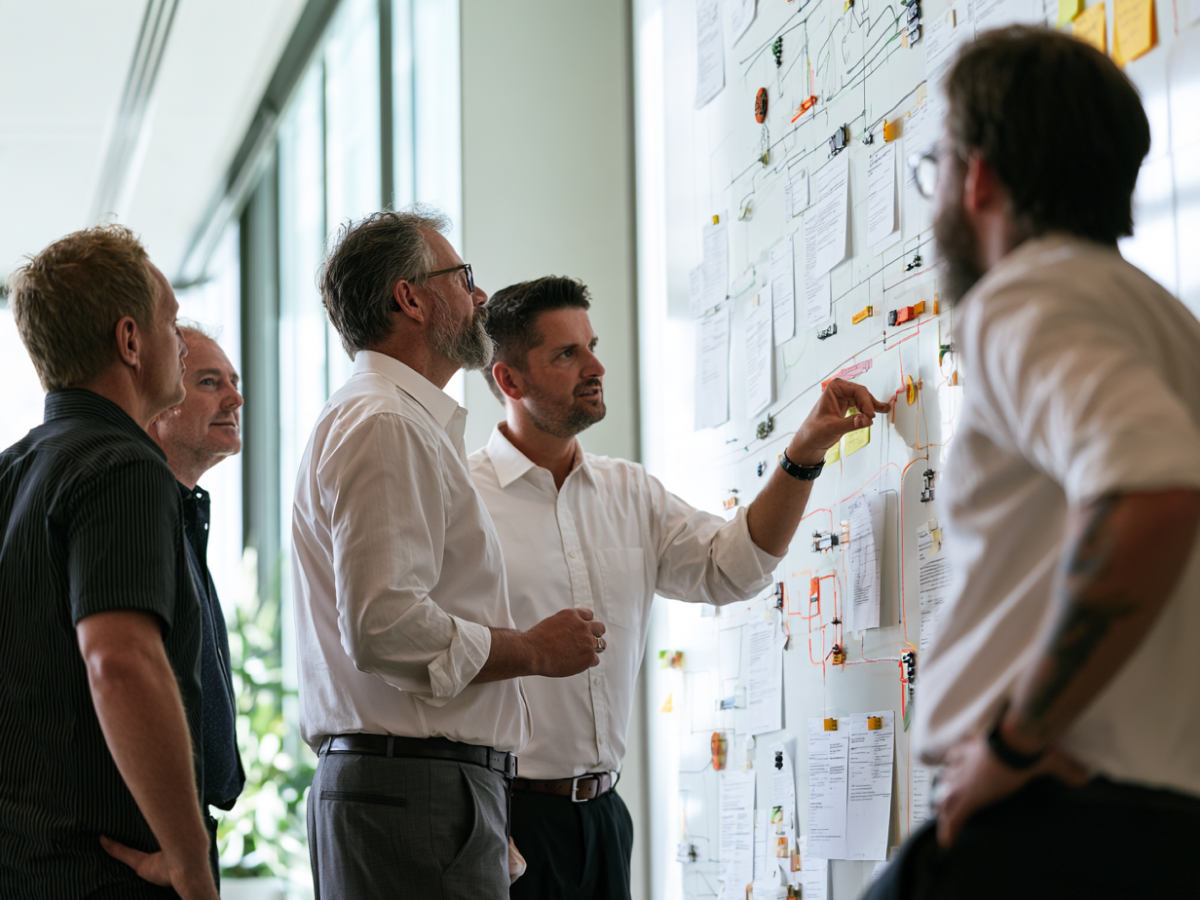
Faster research can still be slowed down between tasks
A questionnaire can be finished quickly while substantial work remains between stages. Consider a study where responses must be exported, reformatted, checked, and cleaned before reporting can begin. Findings then have to move into a new document and presentation. Each task may be fast on its own while transfers and reconstruction extend the full project.
For research leaders, the useful diagnostic question is where elapsed time accumulates. It may be design, recruiting, fieldwork, approvals, analysis, or the transitions among them. Teams that repeatedly spend time on exports, reformatting, cleaning, and rebuilding should measure those transitions separately. That baseline shows whether workflow integration deserves investment.
The same logic applies when evaluating AI. Cutting an analysis task from hours to minutes creates limited project-level value when later stages still require days of manual handling. The business case depends on elapsed project time and manual effort. A feature-level speed gain matters when it survives the rest of the workflow.
Workflow continuity targets the gaps between stages
Workflow continuity means keeping a study’s data, decisions, and context connected as work moves from the initial research question through fieldwork, analysis, and presentation. The goal is to reduce repeated transfers and reconstruction. Changes to a questionnaire, quota decisions, quality issues, and emerging interpretations can remain available to later stages. Researchers spend less effort recreating information generated earlier in the study.
This shifts attention from individual AI outputs to the connections among them. Questionnaire drafting, analysis, and summary generation each produce a visible result, while continuity addresses the manual work required to turn one stage’s output into usable input for the next. When those transition costs are material, reducing them can shorten the full project.
Context is part of the problem. A final report reflects the study’s purpose, questionnaire structure, fieldwork events, and the findings that became important during analysis. Keeping that information connected gives later stages access to earlier decisions. The practical test is local: measure whether delays recur between stages and whether better continuity reduces them.

A project in mind?
Schedule a 30-minute meeting with us.
Senior experts helping you move faster across product, engineering, cloud & AI.
Evaluate continuity claims at project level
Scalafai offers one commercially interested vendor example of this approach. The company benefits if research teams adopt its platform, so its descriptions should be treated as vendor claims and tested independently. The practical question for a buyer is whether a connected workflow reduces transfers and reconstruction on a live study while preserving the context needed for later decisions.
Field management illustrates the broader principle. Software can execute predefined operational rules while researchers handle cases requiring judgment. A buyer can test that division of responsibility by tracking interventions and exceptions during fieldwork. The same test applies to analysis and reporting: quality, traceability, and reduced reconstruction matter more than the speed of an isolated task.
Automation should remove repeatable project mechanics
A connected workflow still needs a clear boundary between automated execution and researcher judgment. Programming, predefined field controls, routine quality checks, data transfers, initial synthesis, and document production are concrete candidates for automation when their rules can be specified. A pilot can measure whether automating those tasks reduces manual hours. The result should be assessed at project level.
Researchers remain accountable for decisions with business consequences. They determine what the business needs to learn, assess whether interpretations are valid, decide which findings warrant executive attention, and frame conclusions for action. AI can supply material for those decisions, while responsibility for the resulting judgment remains with the research team.
This makes expert time a useful operational measure. A team can record how many hours researchers spend on transfers, formatting, routine checks, and document production, then compare that with time spent interpreting evidence and advising decision-makers. Those measurements show whether automation changes how scarce specialist capacity is used. Counts of generated questionnaires, summaries, or slides cannot answer that question on their own.
Continuity can coexist with an existing stack
Many research organizations use multiple tools, suppliers, processes, and controls. A continuity initiative can create migration and integration work even as it removes handoffs. Buyers should include those costs in the same workflow measurement used to estimate potential savings. The relevant outcome is the net change in effort and elapsed time.
Modularity alone does not establish continuity. A buyer needs to test whether data, metadata, decisions, and context cross system boundaries without creating substantial reconstruction work. That test matters when evaluating a vendor platform alongside existing research tools, suppliers, processes, and controls.
A live project can expose those integration costs. Teams can record manual interventions, exports, formatting work, and time spent resolving transfer problems before and during a pilot. That evidence shows whether an added component removes existing handoffs or creates new ones. It also allows comparison with process redesign or conventional systems integration.
Security and compliance belong in the implementation review because a connected environment can handle data across several stages of a study. Buyers should verify a vendor’s current security and compliance status and its scope against their data-handling and procurement requirements. The assessment should reflect the specific data and integrations used in the proposed deployment.
Measure handoffs before selecting the intervention
Start with a representative live study and record where elapsed time and manual effort accumulate. Measure questionnaire design, recruiting, fieldwork, approvals, analysis, exports, reformatting, quality cleaning, reporting, and transfers between tools or people. This creates the baseline needed to identify the material constraint. It also prevents an impressive feature demonstration from becoming a proxy for project-level performance.
The baseline may point somewhere other than workflow transitions. If recruiting or stakeholder approvals dominate the schedule, reducing transfer time will have a smaller effect on the full project. AI is one possible intervention for fragmented workflows. Process redesign and conventional integration should also be evaluated when they address the measured bottleneck.
When exports, rebuilding, cleaning, and handoffs consume material time, test the proposed intervention on a live project. Measure end-to-end elapsed time, manual hours, quality interventions, and the work required to carry context across stages. Compare those results with the baseline and include any new integration work. The intervention earns its place when the measured reduction in project costs is meaningful and researchers retain control over the judgments that shape what the business learns.
Key highlights
- Measure the full research cycle: Research owners should track elapsed time across design, recruiting, fieldwork, analysis, reporting, and handoffs. Task-level AI speed creates project value when those gains survive the full workflow.
- Preserve context across stages: Workflow continuity keeps data, decisions, and study context connected from the research question through reporting. Buyers can test whether this reduces transfers, reconstruction, and manual effort on a live study.
- Test continuity claims with project metrics: Research buyers evaluating connected platforms should measure end-to-end time, manual interventions, traceability, and quality. Vendor claims become useful when a live pilot shows measurable project-level gains.
- Automate repeatable project mechanics: Research teams can automate programming, routine checks, transfers, initial synthesis, and document production where rules are clear. Researchers retain responsibility for interpretation and decisions with business consequences.
- Account for integration costs: Organizations adding workflow technology should measure migration, integration, security, compliance, and new manual work alongside expected savings. Net reductions in project time and effort determine whether continuity adds value.
- Find the bottleneck before choosing the intervention: Research operations teams should baseline handoffs, exports, cleaning, approvals, and other sources of delay before investing. That evidence indicates whether AI, process redesign, or conventional integration best addresses the constraint.

A project in mind?
Schedule a 30-minute meeting with us.
Senior experts helping you move faster across product, engineering, cloud & AI.