The traditional promotion pipeline has structurally collapsed
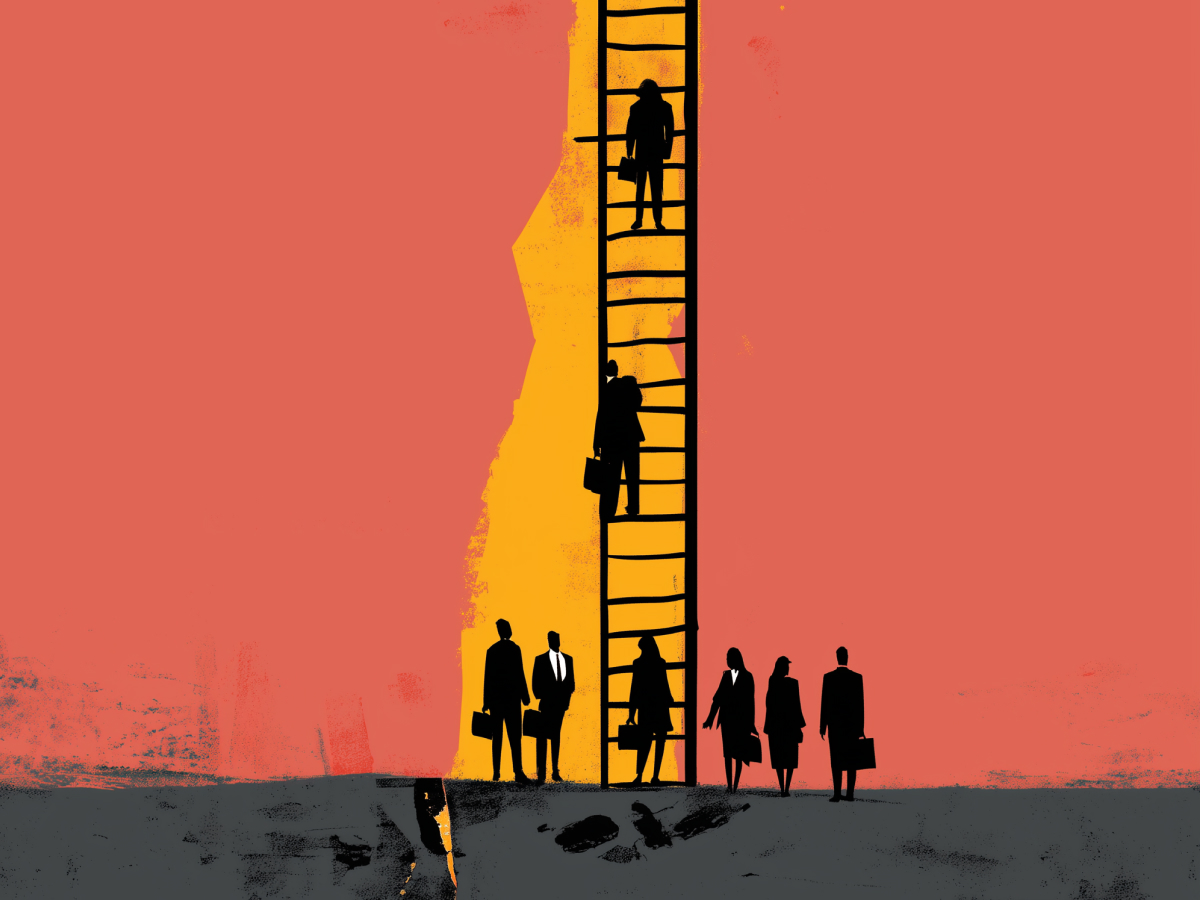
Career progression models are no longer functioning as they once did. The corporate ladder has been replaced by a bottleneck. Senior leaders are delaying retirement, mid-career managers are stuck, and early-career employees are moving faster between companies because they see no real path upward. This isn’t a matter of attitude, it’s a structural breakdown in how organizations move talent.
When senior employees hold their seats longer, every level beneath them slows down. Promotions into managerial roles drop by nearly half when older workers postpone retirement by just one year. Annual wage growth for younger workers falls by 2.5%, and overall white-collar promotion rates decline by 21%. These numbers reflect something deeper than poor management, they show a system that no longer matches the realities of today’s workforce.
For early-career workers, the message is clear: staying still isn’t worth it. Gen Z employees now average 1.1 years per employer, compared to 1.8 for Millennials and 2.9 for Boomers. They’ve done the math and concluded that loyalty doesn’t pay off the way it used to.
Executives need to stop seeing this as a retention problem. It’s not about motivation or mindset; it’s about math. The current structures simply cannot support the volume of talent entering the workforce. We’re watching an old model fail under modern pressure. Fixing it means redesigning systems for fluidity and transparency, not waiting for retirements or lateral moves to create space.
Leaders who understand this shift will need to think differently about advancement. They must design talent pipelines that adapt to demographic realities and economic cycles in real time. The companies that move first will own the next generation of skilled talent. Those that don’t will keep losing people to firms that already made the shift.
Financial pressures and structural barriers are trapping mid-career employees, especially Gen X
Gen X workers are facing the hardest realities in this stalled system. They’re financially stretched, caring for aging parents and kids who are preparing for college, and seeing their own retirement plans pushed further into the future. They’re not staying in mid-level roles because they want to, they’re staying because they can’t afford to leave.
Eighty-one percent of Gen X employees say their current pay doesn’t provide financial security. That number outpaces every other generation: Gen Z at 75%, Millennials at 73%, and Boomers at 71%. Among older workers who were laid off between ages 50 and 65, nearly one in four never found new employment. Each year of delayed retirement increases layoffs by about 10% and reduces new hiring by 2%. These are not abstract figures; they describe a workforce gridlocked by necessity.
The stagnation affects more than individuals, it affects the entire system. When mid-career professionals hold positions they can’t vacate, the next generation cannot move up. This blocks talent flow, lowers morale, and ultimately reduces an organization’s ability to adapt to new business challenges. Every day that progression stays frozen, top performers get more frustrated and more likely to leave.
For leadership, this is a strategic threat. You can’t expand innovation while your most experienced employees are constrained by financial and structural limits. Fixing it means creating new models for compensation and career development that give mid-career professionals both security and motion. Companies that offer flexible progression tracks, renewed skill incentives, and transparent growth metrics will free up movement across levels without forcing people out.
This should be a wake-up call for executives. The generation currently managing operations, strategy, and teams is constrained by systems that lack agility. To keep your best talent engaged and ready for the future, address the real pressure points, pay, progression, and predictability. Without that, you’re not just losing potential, you’re weakening the middle of your entire organization.
AI adoption is compounding talent challenges and heightening employee anxiety
AI should be expanding opportunity, but for most companies, it’s doing the opposite. It’s deployed to cut costs and streamline tasks, yet few organizations are integrating it with workforce development. The result is predictable, fear outweighs optimism. Most employees see AI as a replacement, not a partner, because no one is explaining how it fits into their roles or careers.
Seventy-one percent of employees worry about AI’s impact on their jobs, and almost half of Gen Z and Millennials believe it could replace them altogether. Yet only 63% of Gen Z workers use AI tools at all, compared with 74% of Millennials. The missing piece is training. Eighty percent of employees say proper instruction would make them more confident using AI, but 73% don’t think their company will provide it. That’s a major failure of leadership and communication.
Instead of developing AI literacy and linking it to advancement, organizations are treating AI as a cost-efficiency project. This approach freezes progress across the workforce. Mid-career managers and new hires alike are caught in the middle, blocked by limited promotions and uncertain about technology that could redefine their jobs. When both opportunity and understanding vanish, turnover follows.
Executives need to change the conversation around AI. The objective isn’t to save labor, it’s to expand value. Training programs tied directly to business priorities will reduce anxiety, boost adoption, and open paths for those ready to lead the next phase of digital transformation. Companies blending AI integration with skill-building create confident teams capable of scaling innovation across functions.
Leaders must make AI training part of their career development strategy, not an optional module. This shift reframes AI from a threat into a multiplier of skill, confidence, and opportunity. If your employees understand how AI increases their strategic importance, you’ll see engagement grow instead of evaporate.
Conventional corporate systems are misaligned with today’s dynamic workforce realities
Corporate structures still reflect an era that no longer exists. Promotion systems and compensation models were designed for predictable career paths, stable retirement ages, and lifelong loyalty. None of these conditions hold true anymore. People work longer than ever, career trajectories are non-linear, and mobility, both internal and external, is constant.
Since the 1980s, the number of Americans working past 65 has quadrupled. Nearly 20% of people over 65 remain in the workforce, and two-thirds of Boomers say they lack enough savings to retire. These figures aren’t temporary fluctuations, they define a long-term transformation of labor dynamics. Most companies haven’t adjusted their systems to reflect this. Succession planning still assumes retirement at 65. Pay bands and job structures rarely account for extended tenure or multi-track careers.
This misalignment creates friction throughout the organization. Younger employees lose faith in promotion timelines. Mid-career professionals see no open paths. Senior employees feel financial pressure to stay longer. The system strains until attrition becomes the only release. Leaders who fail to acknowledge this won’t correct it; they’ll lose their most capable people at critical moments.
Executives have to rethink how career progression works inside their organizations. That means compressing rigid hierarchies, diversifying promotion models, and integrating continuous capability-building into everyday operations. Workforce design can’t be a once-a-decade exercise, it must evolve as quickly as the workforce itself.
The companies that adapt will become talent magnets, attracting employees who see clarity, opportunity, and support for growth. Those who keep running 2025 teams on a 1995 model will struggle with disengagement, stalled innovation, and persistent turnover. Modern leadership means building systems as dynamic as the people inside them.
Successful companies are adopting a three-path model to revamp career advancement opportunities
The old structure of promotion ladders has stopped delivering results. The companies that are retaining and developing top talent have built more flexible systems with three clear paths: vertical mobility with transparency, lateral growth focused on skill building, and strategic role redesign aligned with emerging technologies such as AI. Each path responds to the new realities of work, more fluid movement, broader capabilities, and accelerating technological change.
The first path, vertical mobility with transparency, gives employees visibility into what’s actually possible. Several organizational leaders are creating live internal dashboards showing open positions, projected openings, and required skills. These tools build trust by exposing both opportunities and constraints. Employees don’t expect constant promotions, but they do expect honesty. Clear communication about available paths reduces disengagement and shortens the time people spend in uncertainty.
The second path, lateral growth, builds versatility. When vertical promotions are scarce, skill-based rotations give employees a way forward. Management Science research shows that employees who take lateral moves are more likely to be promoted within three to four years than peers who stay in a single role. Companies that formalize these moves, 6–12-month rotations into new teams or departments, expand both capability and visibility. This approach strengthens institutional knowledge without adding extra headcount.
The third path, role redesign, turns the integration of technology into opportunity. Forward-thinking firms are mapping every role against AI capabilities to determine which tasks can be automated, which still require human judgment, and which emerging skills will define the next set of specialist roles. This method creates advancement for employees at all levels without waiting for turnover. Mid-level professionals gain access to more strategic functions, while senior staff shift toward mentorship and advisory roles.
Executives should view the three-path model as a blueprint for modern workforce design. It doesn’t rely on attrition and doesn’t promise instant promotion. It delivers what today’s workforce values most: momentum, learning, and fairness. Organizations that implement these systems will find stronger retention, faster capability growth, and a workforce ready to adapt to future demands.
Leadership must address systemic issues by redesigning talent systems rather than relying on outdated paradigms
The promotion problem won’t fix itself. Leaders need to stop waiting for retirements or market turnover to open new paths. Instead, they must audit their organizations to understand exactly where mobility stops and why. This involves reviewing actual promotion timelines, succession blockers, and gaps between what candidates are told and what employees experience. The truth may be uncomfortable, but it’s essential for any organization that wants to retain its best people.
The first step is honesty. If an employee asks when they might be promoted and no one knows, that should be acknowledged directly. Vague promises erode trust faster than difficult facts. The next step is to design alternatives to vertical promotion. Not every employee can move up, but everyone must have a way to move forward. Programs that reward new skills, certifications, and lateral experiences create momentum even in slow-moving hierarchies.
Training is central to solving this issue, especially around new technologies. Eighty percent of employees say AI training would reduce their anxiety, yet most companies still treat training as secondary. Leaders must make development an integrated part of career progression, not a distant perk. Training that connects directly to business goals creates more confident, strategic employees and reinforces a culture of growth aligned with company priorities.
Strategically, this is about long-term competitiveness. The organizations that take workforce design seriously will keep their top talent engaged, skilled, and future-ready. Those that refuse to adapt will continue to lose people to rivals who already did. C-suite leaders must think beyond traditional HR frameworks and design a system built for the workforce they actually have, not the one they had decades ago.
Executives who act decisively, by combining transparency, skill pathways, and accountable leadership, will regain control of talent flow. They will be the ones shaping the future of work, not reacting to it.
Long-Term organizational success hinges on rapidly adapting talent systems to modern workforce demands
The long-term strength of any organization depends on how effectively it aligns its talent systems with today’s workforce realities. The most capable employees, those with experience, credibility, and ambition, are leaving when they see no movement ahead. This pattern is not random; it’s the result of outdated promotion models that no longer reflect how careers evolve. Every time a high performer exits, the organization loses institutional knowledge, continuity, and potential future leadership.
The data point to a clear truth: companies cannot rely on historical structures to hold modern employees. The combination of extended careers, delayed retirements, and rapid technological disruption has changed the rules. If executives want to preserve top talent and drive long-term value, they must prioritize clear, flexible systems where advancement can occur in multiple ways. Transparency, skill-driven growth, and technology-enabled progression are now essential features of a competitive employer.
This requires leaders to think systemically. Promotions, skill-building, and retention are not separate issues, they are interdependent elements of business performance. Executives who integrate these elements create organizations that learn faster and respond better to shifts in demand, technology, or workforce expectations. In contrast, companies clinging to old frameworks will continue to experience stagnation and rising attrition costs.
Modern leadership is about redesigning the mechanics of opportunity. Audit your promotion timelines, identify skill gaps, and implement mechanisms for visible, measurable progress. Make every level of the organization capable of internal advancement without waiting years for an opening. Doing this well turns workforce design into a strategic advantage, not an administrative concern.
The path forward is demanding but clear: organizations must evolve the way they grow people, not just the way they operate. Those that build dynamic, transparent, and skill-centered talent systems will keep their best people and attract others who value progress over promises. The companies that act decisively now will set the standard for what the modern workplace should be, agile, credible, and built for sustained growth.
In conclusion
The message for leaders is clear: the workforce has evolved faster than the systems managing it. The promotion pipeline didn’t just slow down, it collapsed under the weight of delayed retirements, rigid hierarchies, and unaddressed skill gaps. Many organizations are still operating within frameworks built for a workforce that no longer exists, and the result is predictable, talent moving outward instead of upward.
Executives have a choice. They can continue maintaining outdated systems and watching high performers exit when opportunities stall, or they can rebuild for the realities of today’s labor market. The fix doesn’t require endless reorganization. It requires clarity, transparency, and structured pathways for progress, both vertical and lateral. It also demands that AI and technology be integrated into learning and career growth, not treated solely as cost-saving measures.
The companies winning today are those that treat career mobility as a competitive advantage. They’re embedding measurable skill growth, open visibility into opportunities, and constant feedback loops into their workforce strategies. They’ve stopped protecting old hierarchies and started creating new ecosystems for talent to grow.
As a leader, your greatest strategic edge comes from designing a system where people can advance, learn, and stay engaged without waiting for others to leave. Future-ready organizations will be those that don’t just adapt to workforce change, they anticipate it, design around it, and grow stronger because of it.


A project in mind?
Schedule a 30-minute meeting with us.
Senior experts helping you move faster across product, engineering, cloud & AI.