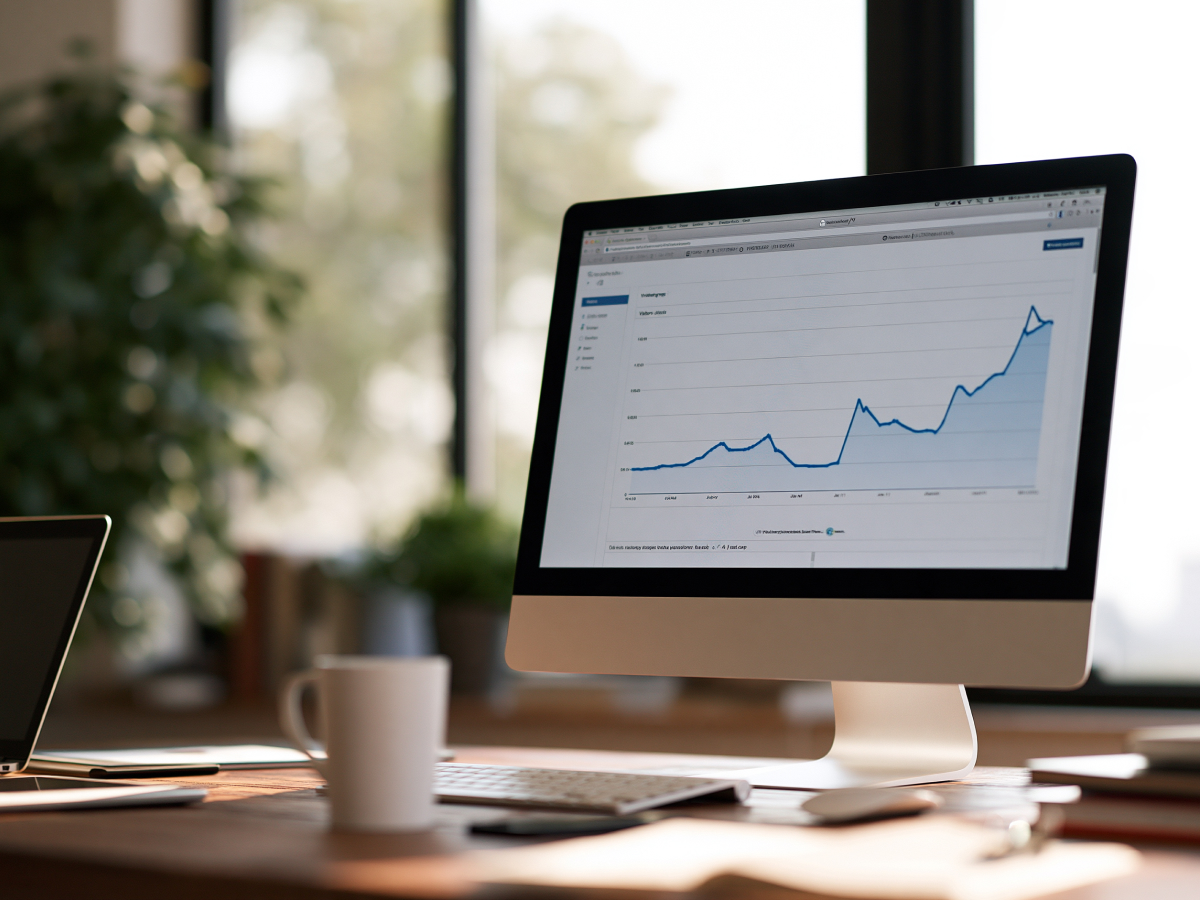
Global demand for real-time energy monitoring is rising
The global business landscape is moving quickly toward smarter, cleaner operations. Energy control systems are playing a leading role in that shift. As of 2023, the market for these systems reached $40.7 billion and is expected to almost double to $75.6 billion by 2028. That’s a growth rate of 13.2% per year, driven by the need for efficiency, sustainability, and digital transformation.
For forward-looking companies, real-time energy monitoring is not just an operational upgrade, it’s becoming a strategic asset. By tracking energy use minute by minute, leaders can reduce waste, manage costs, and ensure compliance with tightening environmental standards. It transforms energy from a fixed overhead cost into a controllable, optimizable resource.
C-suite executives should recognize that energy transparency is becoming a core marker of strategic maturity. Investors, regulators, and customers increasingly favor data-backed sustainability. Real-time monitoring allows companies to move beyond reactive management into proactive optimization, reducing emissions while securing long-term profitability. The market trend is clear: businesses that combine efficiency with environmental consciousness are setting the pace.
Real-time energy monitoring provides continuous, actionable insight
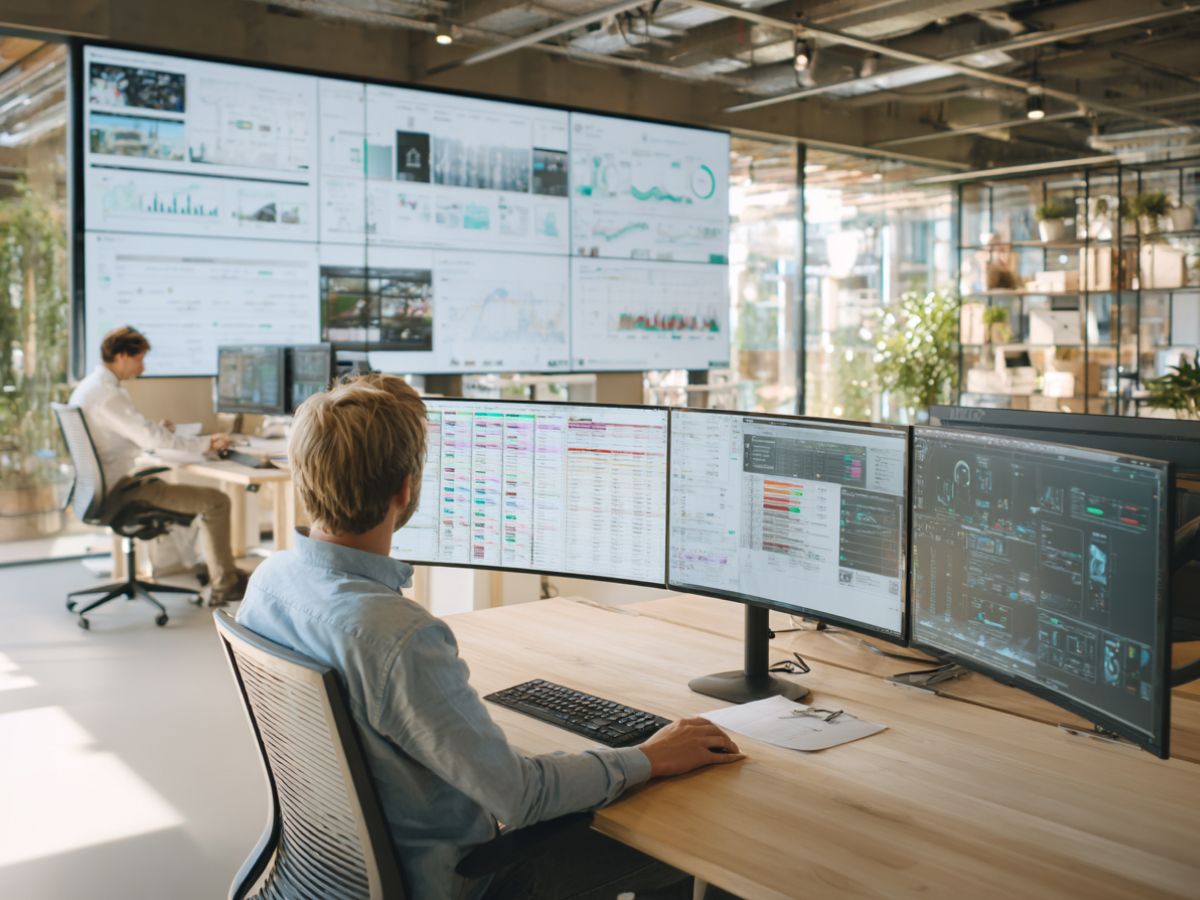
Traditional energy audits are slow, static, and often outdated by the time they deliver results. Real-time monitoring changes that. Sensors, installed across key facilities and assets, collect live data on how power is used throughout the day. That data feeds directly to software dashboards, giving facility managers a continuous readout of energy flow and system performance.
This capability lets executives and operations teams act immediately. Whether it’s adjusting usage during high-cost peak hours or spotting failing equipment before it breaks down, real-time visibility enables intelligent, fast decision-making. The outcome is measurable, lower costs, better reliability, and stronger alignment with sustainability goals.
For leadership teams, the nuance lies in integration. Monitoring must be part of a broader performance strategy. The insights gathered should feed into budgeting, infrastructure planning, and long-term capital allocation. When combined with a clear data governance framework, real-time monitoring becomes a decision-making engine.
The real advantage is agility. Companies that adopt live energy insight can pivot faster, optimize operations continuously, and respond to external shocks, from fluctuations in energy prices to new compliance requirements. In this sense, real-time monitoring is a foundational component of efficient, intelligent business operations in the modern economy.

A project in mind?
Schedule a 30-minute meeting with us.
Senior experts helping you move faster across product, engineering, cloud & AI.
Proven energy and cost savings through research and case studies
The evidence behind real-time energy monitoring isn’t speculation, it’s data-backed and proven across industries. Studies show that continuous energy tracking and active management deliver consistent savings, lower emissions, and stronger operational outcomes. The measurable results are significant enough to shape corporate strategy.
The U.S. General Services Administration (GSA) documented $13.5 million in projected savings from real-time energy management in federal buildings. This result came with a 41% reduction in overall energy use and a reduction of 3,100 metric tons of carbon emissions per year under the Smart Buildings program. The American Society of Heating, Refrigerating and Air-Conditioning Engineers (ASHRAE) confirmed that continuous monitoring, paired with operational improvements, reduces energy consumption by 10 to 20%. IBM achieved even greater results, cutting energy use in its data centers by up to 30% through real-time monitoring and predictive analytics.
For executives, the takeaway is clear: energy data, when properly harnessed, becomes a source of measurable competitive advantage. These savings translate into stronger margins, improved sustainability reporting, and an enhanced reputation for efficiency. But the key lies in execution. Without commitment to follow-through, tracking, analysis, and adaptation, technology alone cannot realize its full potential.
Organizations that embed monitoring into decision-making processes are better positioned to anticipate problems, adjust operations dynamically, and achieve strategic sustainability targets. These gains demonstrate that real-time energy monitoring is not just an environmental solution, it is a high-yield financial strategy that directly impacts profitability.
Advanced, interconnected technologies power real-time monitoring
Real-time energy monitoring relies on a set of advanced, interconnected technologies designed to capture, process, and analyze vast amounts of data without delay. At its core, the system depends on Internet of Things (IoT) sensors. These small devices measure power use, temperature, and other relevant indicators. They send continuous data to cloud systems for storage and analysis.
Cloud computing provides the necessary capacity and scalability to aggregate massive data streams securely. In some use cases, edge computing is integrated to process critical information locally before sending it to the cloud. This reduces response time and allows immediate corrective action in energy-critical environments. Artificial intelligence (AI) and machine learning (ML) algorithms analyze data patterns, forecast future consumption, detect irregularities, and recommend or automatically execute optimized actions.
Some organizations now add blockchain technology to secure and verify energy data, ensuring integrity and transparency across departments and external stakeholders. Integration with existing Building Management Systems (BMS) completes the process, allowing direct, automated control of lighting, HVAC, and other infrastructure based on real-time analytics.
For executives, the key nuance is coordination. Each technology, IoT, AI, cloud, edge computing, blockchain, serves a purpose, but the value lies in how effectively they work together. A well-integrated system doesn’t just collect data; it uses it intelligently, driving automation and informed decision-making. Choosing the right mix of technologies aligned with business capacity and objectives ensures scalability, cost efficiency, and long-term resilience.
Taken together, these technologies form a framework for intelligent operations, where data becomes a continuous input for optimization rather than a static report that arrives after the fact. Leaders who understand and invest in this synergy position their companies to achieve both operational precision and strategic sustainability.
Enhancing energy efficiency yields multiple operational benefits
Energy efficiency is no longer just an environmental target, it’s a measurable business performance metric. Real-time monitoring adds precision to how organizations consume energy, enabling leaders to identify waste, redesign inefficient processes, and optimize operations without compromising output quality. This degree of visibility allows companies to operate leaner and smarter, supporting both financial and sustainability goals simultaneously.
Real-time monitoring provides immediate feedback on energy usage, allowing leaders to pinpoint overconsumption zones, peak demand periods, or underperforming equipment. The data supports executives in making quick, informed decisions, whether reallocating loads, upgrading inefficient machinery, or restructuring workflows to maintain performance with lower energy use. It also aids in compliance, as regulators increasingly require detailed energy reporting. With constant data capture, businesses can generate accurate reports instantly, avoiding penalties or reputational risk from non-compliance.
For C-suite leaders, the nuance lies in balancing short-term costs with long-term returns. Implementing a real-time monitoring system demands investment in sensors, analytics, and training, but payback can start within months when operational improvements are applied systematically. The real gain arrives through continuous optimization: businesses stay compliant, reduce energy-intensity ratios, and demonstrate quantifiable progress toward sustainability commitments.
Companies that excel in energy efficiency tend to strengthen their market credibility. Their strategies resonate with investors, clients, and regulators who value transparency and responsible operations. More importantly, continuous energy visibility becomes an internal culture of accountability. Decisions are based on verified data rather than assumptions, and that transparency supports financial discipline across the organization.
Real-time monitoring supports comprehensive cost reduction strategies
Real-time energy monitoring creates a direct path to cost savings across production, operations, and infrastructure. Through immediate insight into consumption patterns, executives gain control over inefficiencies that would otherwise remain hidden. This results in lower operational costs, fewer equipment failures, and optimized use of energy-intensive assets.
Monitoring systems support predictive maintenance by identifying irregular energy spikes that may signal pending equipment issues. Addressing these anomalies early prevents costly downtimes and extends asset life. The same data also enables demand-side management, reducing energy draw during high-tariff periods and redistributing loads to periods with lower utility rates. Automating these processes saves labor and ensures that systems operate at maximum efficiency with minimal manual oversight.
For decision-makers, it’s essential to weigh the benefits of automation against the risks of dependency on complex technologies. Data security should remain a top priority, as these systems process sensitive operational information. Integrating cybersecurity protocols and regular audits into the monitoring framework helps maintain control and trust.
The strategic value of real-time monitoring is its cumulative effect. Every efficiency gain, from reduced maintenance costs to smarter energy allocation, adds up to meaningful budget relief. The insights produced feed directly into procurement, production planning, and strategic forecasting. Executives can redirect the recovered capital into innovation, expansion, or sustainability initiatives without compromising daily operational stability.
Real-world results support the case. Studies by the GSA and IBM highlight that consistent monitoring correlates with major cost reductions and measurable sustainability improvements. For leaders, the goal is clear: implement systems that transform energy data into constant financial gains while maintaining resilience and adaptability in a competitive global environment.
Optimizing building performance through real-time monitoring
Real-time energy monitoring doesn’t stop at power management, it extends directly into optimizing how buildings function. By capturing data from energy systems, HVAC units, and lighting networks, executives can view their buildings as integrated ecosystems where each component contributes to overall performance, cost efficiency, and occupant satisfaction.
The technology enables continuous oversight of heating, cooling, and lighting patterns. For example, building systems can automatically adjust to changing occupancy levels, temperature variations, or natural light availability. These actions ensure that energy use aligns precisely with real demand, avoiding unnecessary consumption. The result is a significant reduction in waste, better occupant comfort, and improved operational reliability.
An often-underestimated value lies in maintenance optimization. Predictive analysis of equipment performance helps identify irregular patterns before a breakdown occurs. Scheduled servicing then becomes data-driven rather than reactive, saving both time and capital. For executives managing multiple sites, this translates into smoother operations and fewer unplanned disruptions.
C-suite leaders should also consider integration challenges that come with advanced systems. Many existing buildings use a mix of software and mechanical components that don’t naturally communicate with one another. Successful deployment depends on ensuring system compatibility, strong cybersecurity protocols, and careful planning during onboarding. Investing in secure infrastructure and data management capabilities is a prerequisite for extracting the full value of real-time monitoring.
In summary, the more efficiently a building operates, the greater the long-term payoff. Optimized building performance leads not only to lower utility bills but also to higher asset value, stronger compliance ratings, and an enhanced reputation for operational excellence.
Implementation requires systematic planning and strategic execution
Implementing real-time energy monitoring is not about installing technology, it’s about designing a process that supports sustainable results. The most successful implementations start with clear energy goals aligned with broader business objectives. Once organizations define targets, the next step is evaluating existing infrastructure to understand current consumption patterns, capabilities, and gaps.
Executives should approach deployment strategically. The initial phase can begin with a proof of concept (PoC) or a minimum viable product (MVP), applying monitoring in selected departments or facilities. This controlled approach allows teams to test technology accuracy, data quality, and responsiveness without disrupting ongoing operations. Once efficacy and ROI are confirmed, the rollout can expand across the organization.
Choosing the right technology partners is critical. Internal teams may lack the expertise to develop or integrate complex systems effectively, so collaborating with trusted developers or service providers ensures technical alignment and long-term stability. These partners can also assist with employee training, integration, and cybersecurity, areas that often determine project success or failure.
For top executives, attention to governance is essential. Real-time systems generate immense amounts of data, and this information must be organized, secured, and assigned clear ownership across departments. Continuous performance reviews based on reliable analytics ensure that monitoring remains an active part of decision-making, rather than a background process.
Organizations that plan thoroughly, test iteratively, and train consistently position themselves to maximize long-term returns. Beyond immediate efficiency gains, such structured implementation builds a foundation for future innovation. Monitoring data can later feed into broader digital transformation strategies, enabling predictive analytics, carbon reduction tracking, and enterprise-level sustainability integration.
In essence, precision planning and disciplined execution transform real-time energy monitoring from a project into a scalable operational advantage.
System selection must balance granularity, compatibility, and cost
Choosing the right real-time energy monitoring system is a strategic decision that depends on how deeply your organization wants to analyze energy data and how well the new system will integrate with existing infrastructure. System design and feature selection must strike a balance between accuracy, efficiency, and operational simplicity.
High-end systems with advanced data granularity deliver detailed insights that can reveal subtle inefficiencies within complex operations. These systems typically offer full compatibility with existing hardware and extensive integration options with third-party analytics tools and automation platforms. However, they also come with higher costs and require greater technical expertise to manage effectively.
Mid-level solutions often provide a balance between functionality and affordability, sufficient detail for most business applications, combined with moderate integration capabilities and a user-friendly interface. Entry-level systems, by contrast, have limited data precision but are more affordable and easier to deploy, making them suitable for smaller organizations or those seeking an initial implementation stage before scaling.
For executives, the nuance lies in aligning system features with both current needs and future growth. A system that is too simplistic may limit strategic insight; one that is too complex could overwhelm teams and strain budgets. Decision-makers should weigh not only installation costs but also training requirements, maintenance commitments, and the potential need for upgrades as technology evolves.
Ultimately, the system selected must align with the organization’s operational ecosystem. High-granularity systems justify their cost in data-driven industries that rely on precision forecasting and continuous optimization. Meanwhile, organizations prioritizing quick deployment and lower total cost of ownership may find that a scalable, modular system offers a more pragmatic path toward energy transparency and digital maturity.
The solar energy data portal case study exemplifies practical application
A real-world example of real-time monitoring in action comes from a New York-based manufacturing company that partnered with Techstack to build a centralized Solar Energy Data Portal. The company needed to consolidate solar energy data from multiple vendors into one reliable, transparent system capable of real-time tracking and advanced analytics.
The project team faced challenges common to large-scale energy initiatives: fragmented data formats, inconsistent data accuracy, and the need for high-speed processing across different hardware setups. These obstacles were addressed through a robust technical architecture designed to collect, standardize, and analyze data on a continuous basis. The result was a single, cohesive platform that aggregated solar performance data by region and inverter status while maintaining historical records for long-term trend analysis.
Technically, the system leveraged proven network protocols, TCP/IP, SNMP, and HTTP, to enable stable, continuous communication between solar panels, inverters, and the central database. The infrastructure was built to scale, ensuring that as solar generation expanded, the system could handle larger data volumes without performance loss. This flexibility ensures the platform remains relevant as technology advances and more data sources are added.
For business leaders evaluating digital energy systems, this case illustrates how well-structured implementations convert complex energy data into actionable insights. The Solar Energy Data Portal improved decision-making, enabled predictive performance analysis, and increased transparency for both internal stakeholders and partners. By consolidating information streams, the company established full control over energy analytics and positioned itself for sustained optimization and scalability.
Executives should note that the project’s success rested not only on technology but also on disciplined execution. Collaboration between the internal technical teams and Techstack ensured that the system delivered dependable data integrity and long-term adaptability. This combination of strong partnerships, precise engineering, and real-time insight demonstrates how focused innovation turns energy data into a strategic business advantage.
Real-time monitoring embodies a commitment to sustainability and business efficiency
Real-time energy monitoring is more than an operational upgrade, it is a visible statement of commitment to efficiency, transparency, and environmental responsibility. For companies competing in a data-driven, sustainability-conscious market, adopting these systems signals leadership and readiness for the next generation of operating standards.
By implementing real-time monitoring, organizations gain the ability to reduce costs, enhance operational control, and minimize environmental impact simultaneously. Energy consumption becomes an active metric, continuously observed, measured, and optimized. The resulting data offers verifiable evidence of performance improvements and sustainability progress, strengthening corporate credibility with investors, regulators, and customers.
Leaders should recognize the dual advantage this technology provides. On one hand, it achieves immediate financial results through efficiency gains and lower utility costs. On the other, it aligns directly with long-term environmental goals by providing concrete data for carbon footprint reduction and compliance reporting. This combination of profitability and sustainability represents a balanced approach that forward-thinking executives strive to achieve.
Major organizations such as IBM and agencies like the U.S. General Services Administration (GSA) have already demonstrated how structured monitoring leads to measurable results. Their initiatives show that continuous energy measurement and actionable analysis can directly translate into millions in savings and notable carbon reductions. For executives planning future sustainability strategies, these examples confirm that integrating real-time data into operations produces tangible value and aligns with global reporting expectations.
For senior leaders, the strategic significance goes beyond infrastructure modernization, it defines how responsibly and efficiently a company operates. By prioritizing technology that both cuts waste and elevates sustainability performance, executives transform energy management into a cornerstone of corporate strength. Real-time monitoring allows companies to stay ahead of regulatory demands, secure investor confidence, and maintain resilience in a rapidly evolving business and environmental landscape.
In conclusion
For business leaders, real-time energy monitoring is more than a technical enhancement, it’s a strategic shift in how organizations operate. By giving immediate visibility into consumption and performance, these systems turn energy from a passive cost into an active source of value creation.
Executives who adopt real-time monitoring gain a measurable advantage: they can cut waste before it becomes expense, address inefficiencies without delay, and align sustainability goals with tangible financial outcomes. The data these systems provide support sharper decisions, stronger forecasting, and a disciplined approach to resource management.
As global markets move toward transparency and sustainability-driven accountability, leadership decisions must reflect both environmental responsibility and operational precision. Real-time monitoring achieves that by merging the speed of technology with the clarity of data. It enables companies to stay resilient, compliant, and profitable in a world where energy intelligence defines competitive strength.
Forward-thinking executives don’t wait for regulation or rising costs to force action, they use technology to lead. Real-time monitoring isn’t just an energy solution; it’s a framework for smarter, faster, and more sustainable business growth.

A project in mind?
Schedule a 30-minute meeting with us.
Senior experts helping you move faster across product, engineering, cloud & AI.