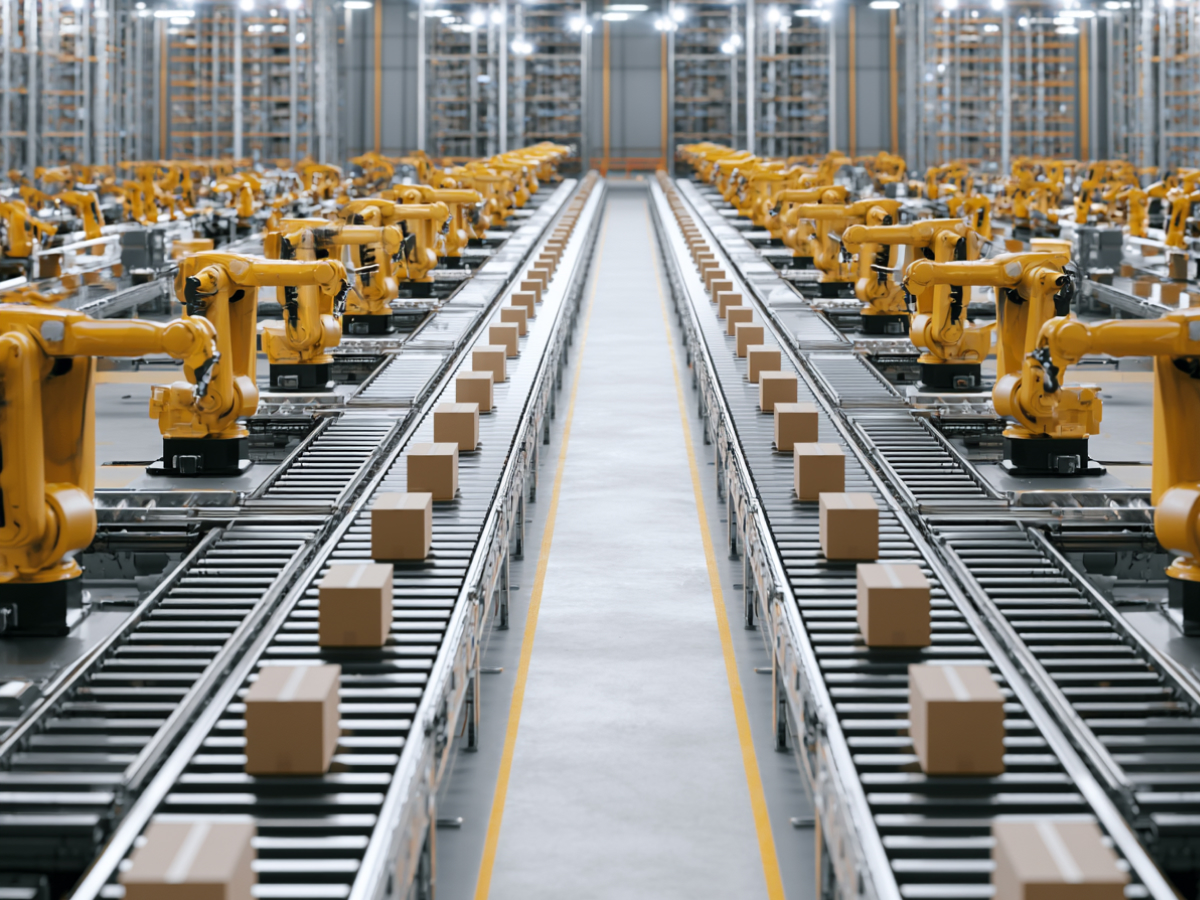
AI is increasingly integrated into supply chain management
Most global supply chains still operate on edge. Despite the growing adoption of AI, the problems keeping executives awake are still familiar, demand instability, shifting geopolitics, and supply volatility. These disruptions continue to define the environment in which companies plan and execute operations. AI is entering this space, but primarily as a support system. It helps leaders make better use of data, automate slow manual tasks, and manage uncertainty with more confidence.
The data from Boston Consulting Group’s Annual State of Supply Chain Planning Survey 2025 tells the story clearly. Among 180 supply chain decision-makers, 70% said demand volatility is their top concern, 64% cited geopolitical instability, and 62% mentioned unstable supply chains. Forecast inaccuracies, recognized by 78%—remain the greatest internal pain point. Only 14% regard AI as a major challenge, showing that many organizations still see it as a tool.
For leaders, this means AI shouldn’t be treated as a fix-all. The best results come when strong forecasting and planning systems already exist. AI then amplifies those systems, helping teams adapt faster and react earlier. Executives planning their next move in supply chain optimization should anchor strategies on stability first, then apply AI deliberately to scale efficiency and resilience. A disciplined, layered approach will ultimately outperform a rushed one.
AI enhances demand forecasting by integrating multiple variables and facilitating holistic sales and operations planning
Traditional forecasting relies on historical data, what happened last month or last year, to predict the future. It works, but only when market conditions remain stable. Today, that’s rarely the case. Machine learning models are rewriting this process by pulling data from multiple sources: weather forecasts, market conditions, financial indicators, and even housing trends. The result is a living forecast that adjusts as new information arrives.
George Lawrie, Vice-President and Principal Analyst at Forrester, explained that organizations using AI in forecasting are not just improving accuracy, they’re improving collaboration. Machine learning gives sales, finance, operations, and logistics teams access to shared, harmonized data. Everyone is working from the same, continuously updated view of demand. That alignment eliminates delays and miscommunication that once caused bottlenecks and lost revenue.
For executives, the nuance is critical. AI doesn’t replace the planner, it equips them. When used well, it cuts through internal noise, allowing leaders to make faster, more confident calls about production, pricing, and logistics. As more organizations adopt AI-powered forecasting, the competitive advantage will shift toward those that use it to connect departments rather than simply automate reports. Integration, not automation alone, is where the real performance edge begins.

A project in mind?
Schedule a 30-minute meeting with us.
Senior experts helping you move faster across product, engineering, cloud & AI.
Generative and agentic AI streamline routine tasks such as contract management and supplier evaluation
AI is cutting through repetitive, low-value tasks that have long slowed down operations. Generative AI can now create and distribute Requests for Information (RFIs), documents that once required significant manual input. Agentic AI adds another layer of strength, it can read, interpret, and prioritize supplier responses automatically, allowing supply chain teams to focus on strategic relationships rather than document handling.
George Lawrie, Vice-President and Principal Analyst at Forrester, notes that these developments save organizations hours of negotiation preparation and follow-up. They free decision-makers to focus on improving strategic alignment with suppliers. RWS Global offers a real-world example. Jake McCoy, its Chief Operating Officer, explained that using AI features built into Box has completely transformed the company’s contract approval workflow. Processing time per contract dropped from twenty minutes to under two minutes. For 200 hires, tasks that used to consume more than eight workdays now take under five hours.
For executives, this shows that AI is ready for operational use today as a measurable performance driver. The business advantage is speed and consistency. Every document, every decision, and every approval happens in a controlled environment with the same level of accuracy every time. Leaders who automate these repetitive but necessary processes position their organizations to react faster, negotiate better, and operate at scale with fewer bottlenecks.
AI, when combined with digital twin technology, significantly improves manufacturing efficiency and predictive maintenance
Digital twins, virtual models of physical production lines, are becoming powerful tools for monitoring and managing complex manufacturing networks. When augmented by AI, they go beyond observation to prediction. AI analyzes real-time data from sensors across a production system, temperature, flow, pressure, and other variables, to identify patterns that signal potential failures or inefficiencies before they disrupt operations.
Unilever, in partnership with Accenture, has implemented this system across its manufacturing network with impressive results. According to the company, its AI-driven digital twin now predicts 95% of process flow restrictions in deodorant stick production lines. This precision has led to a 20% reduction in waste and a 10% increase in capacity. Vicky Cuthbert, Chief Product Supply Chain Officer for Unilever Personal Care, explained that the system provides predictive insights beyond traditional rule-based monitoring, enabling teams to act earlier and troubleshoot issues faster.
Executives should focus on what this data really represents: a shift from reactive maintenance to active performance control. These systems integrate seamlessly into existing operations, improving efficiency without replacing human oversight or established automation. They give decision-makers enhanced visibility across production performance, at batch, line, and plant levels, enabling better strategic decisions. The next step for organizations is to gradually move toward closed-loop systems, where AI recommendations become increasingly autonomous while maintaining oversight from experienced teams. This balance between data-driven automation and human direction is where operational excellence becomes sustainable.
In the retail sector, AI-driven automation improves pricing strategies and content generation
Retail is transforming fast, and AI is leading that shift. The technology is now capable of adjusting prices across thousands of products in real time, based on demand changes, seasonal behavior, and inventory levels. This helps businesses maintain margins while keeping their price positions competitive. AI also enables retailers to automate content creation and translation, speeding up the product listing process across global markets.
Debenhams Group, led by CEO Dan Finley, offers a strong example. The retailer uses the Peak AI platform from UiPath to automate pricing decisions across its brands, including PrettyLittleThing, Boohoo, BoohooMAN, and Karen Millen. The system allows the company to adapt faster during high-demand periods, such as the festive season. Finley explained that this move helps streamline operations, protect margins, and deliver consistent value to customers. Debenhams also works with Amazon Web Services (AWS) to expand these capabilities. Using Amazon Bedrock, the company automates product descriptions and translations into six languages, ensuring products are ready for international sales faster.
Executives should view this as a roadmap for scaling with intelligence. AI ensures that pricing logic and content creation stay synchronized with customer demand, without slowing down operations. When done well, these systems improve both efficiency and customer experience, key outcomes for any brand seeking to operate responsively in multiple markets. The lesson is that small, precise automation across retail operations can have an outsized impact on speed and profitability.
AI’s strongest contributions in supply chain management are incremental
There’s a widespread belief that AI will soon deliver self-operating supply chains. The truth is more nuanced. Boston Consulting Group’s report Why AI Alone Isn’t Enough makes it clear that current AI deployments bring the greatest value by strengthening foundational processes, forecasting, exception handling, and data interpretation. The report notes that organizations that build solid planning systems and then layer AI on top achieve more sustainable success than those that try to leap directly to full autonomy.
George Lawrie, Vice-President and Principal Analyst at Forrester, agrees that AI acts as an accelerator for efficiency. The technology works best when decisions are still guided by structured planning and leadership. It enhances workflows rather than overhauling them, and turns data into actionable insight that supports faster and more accurate choices.
Executives should take this as a signal to resist the rush toward “lights-out” operations and instead invest in maturity. Focus on the fundamentals: clean data, transparent workflows, and aligned teams. Then, integrate AI solutions deliberately to scale performance. The lesson from early adopters is that technology alone cannot repair weak systems. Strong leadership, clear processes, and calibrated use of AI are what separate successful digital transformations from expensive missteps.
Main highlights
- AI adoption requires strong foundations: Leaders should stabilize forecasting and planning systems before scaling AI, as most supply chain challenges still stem from volatility and process misalignment.
- Smarter forecasting through multi-variable AI: Executives should invest in AI models that integrate diverse data signals, economic, environmental, and operational, to enhance forecast accuracy and cross-team coordination.
- Automation accelerates procurement and contracting: Implementing generative and agentic AI in supplier management can drastically cut manual workflows, improving contract speed, consistency, and compliance across operations.
- AI and digital twins elevate manufacturing performance: Combining AI with digital twins allows real-time production monitoring and predictive maintenance, reducing waste and downtime while boosting capacity and efficiency.
- Retail gains from responsive AI systems: Intelligent automation in pricing and content creation helps retailers react in real time to demand changes, protecting margins and improving global scalability with minimal manual effort.
- Incremental AI delivers lasting impact: Leaders should apply AI to strengthen existing processes rather than chase full autonomy; steady, layered integration produces more sustainable results and operational resilience.

A project in mind?
Schedule a 30-minute meeting with us.
Senior experts helping you move faster across product, engineering, cloud & AI.