AI PCs are set to boost enterprise productivity by moving AI workloads from the cloud to local devices
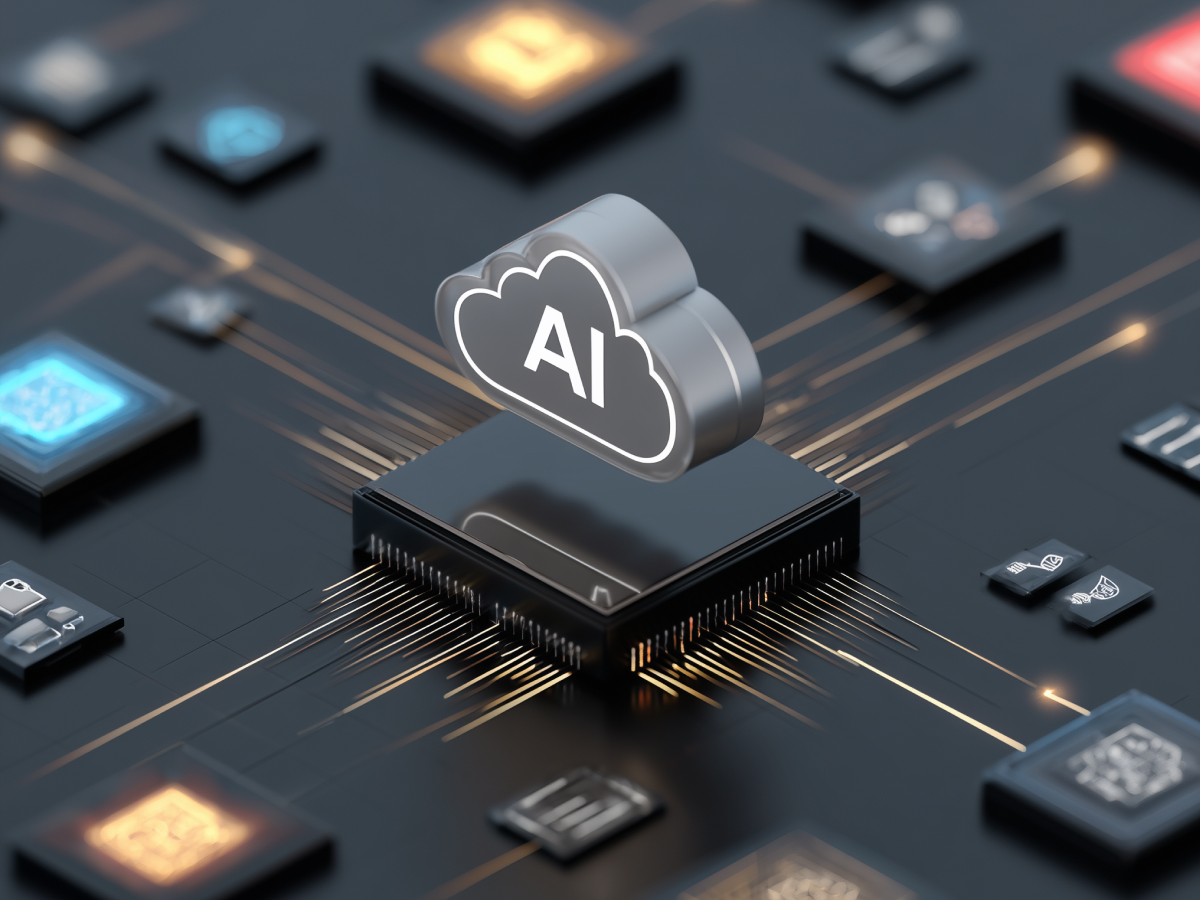
You’re going to see a big shift here. For years, AI has been stuck in the cloud, too large, too power-hungry to run smoothly on most personal or business hardware. That changes now. With the development of new hardware like Intel’s Panther Lake chip, we’re entering a phase where AI can be processed in real time, directly on the device. No delay, no heavy data transfers, no reliance on remote data centers.
Local processing doesn’t just mean better performance. It means control, over speed, over cost, over data. Cloud latency goes away. Downtime from overloaded networks disappears. You get powerful processing on demand, at the edge. That’s practical innovation. And it’s exactly what businesses need to compete.
This hardware is not just marginally faster. It’s orders of magnitude more efficient. Intel’s Panther Lake features 12 GPU tiles, up from 4 in the previous Lunar Lake chip. Your AI tools can now run with near-instant responsiveness, without waiting on external servers. The accompanying neural processing unit (NPU) hits 50 trillion operations per second, up from 40 TOPS. That gives your team speed and capability on par with cloud-grade infrastructure, without the cloud.
What’s driving all this? Simple: demand. Companies want speed. Users want privacy. Engineers want efficiency. Executives want cost reduction. These aren’t conflicting. They align when you process AI locally. You reduce bandwidth loads. You cut spend on external GPUs. You shrink your attack surface. All of it improves the bottom line.
As Jim Johnson, senior VP and GM at Intel’s Client Computing Group, said during CES, this is about bringing “intelligence to applications” and helping workers get more done. This isn’t just better hardware, it’s a new approach to enterprise productivity. Offices and devices start becoming intelligent systems, not passive endpoints.
And the timeline’s not far off. The software is catching up fast. By late 2024 into 2027, enterprises will have a concrete, capable AI environment at the edge. It’s already hitting the market today. You’re going to want your infrastructure ready.
AI PCs will catalyze employee upskilling by enabling hands-on experience with advanced AI tools and customizable workflows
This is where things start getting more interesting. AI PCs don’t just bring faster chips, they enable people to use AI directly, every day, without needing to be engineers. Having that kind of direct interaction with artificial intelligence, right on your machine, creates practical value beyond automation or speed. It equips your team with experience using real tools, not just watching demos from cloud vendors.
For large enterprises, there’s significant upside in this shift. The future of productivity involves integrating AI into real workflows. Generative models, now running on-device, can assist teams in summarizing research, generating creative outputs, automating repetitive reporting, without needing constant internet access or a deep tech background. People learn by doing. Putting those capabilities in their hands speeds up that learning curve by a lot.
Take LLMWare’s ModelHQ as an example. It comes with over 200 small AI models that users can link together to build full workflows, no code required. Employees don’t need to wait for IT or data science teams to roll something out. They can start experimenting, testing, improving. This empowers non-technical staff to become active contributors in digital transformation. It moves capability out of silos.
From an executive perspective, that translates to faster enablement and broader adoption of AI within teams. It also helps you attract and retain talent. AI literacy is becoming a key differentiator in the job market. You don’t want your team depending on third parties for innovation. You want that innovation occurring in-house, driven from within.
Zach Noskey, Director of Portfolio Strategy and Product Management at Dell, made it clear: AI PCs open the door for employees to upskill naturally, just by engaging with more capable machines. That engagement becomes part of the workflow, and part of personal development.
Namee and Darren Oberst, co-founders of LLMWare, are also focused on this direction. They’ve built a system that lets users stack small models to build AI workflows offline. No cloud dependency. No coding. Just accessible tools. The net result is a greater share of your workforce contributing to innovation, instead of waiting on it. That’s how scale happens.
AI PCs promise long-term cost efficiencies by reducing cloud spending and enhancing data security
Here’s the key idea, you invest once, and you start saving everywhere. Running AI workloads on the device means you’re not constantly paying for external compute time. Every AI query sent to the cloud carries a cost, and it adds up fast. Multiply that across departments, users, and time zones, and you end up with cloud bills that exceed the value you’re getting back. That’s inefficient, and that’s avoidable now.
AI PCs shift that model. You reduce the number of calls going out to large language models hosted on someone else’s servers. Local execution offloads cloud infrastructure and cuts external API usage. You lower your bandwidth demands and gain better control over your total cost of ownership. For enterprises managing thousands of endpoints, the financial impact is significant.
Security also improves by keeping data on device. Moving fewer workloads to the cloud reduces exposure. Data stays local. You face fewer third-party vulnerabilities and lower compliance risk. That’s not just useful, it’s essential if your industry handles regulated or sensitive information. Legal, healthcare, finance, they all benefit from keeping critical processes tighter and controlled on-site.
Dell has been emphatic about the value here. Zach Noskey, Director of Portfolio Strategy and Product Management, outlined this clearly: the upfront costs of AI-capable PCs are offset over time through reductions in cloud fees, improved work output, and stronger security posture. These aren’t speculative benefits, they’re structural changes to how your organization builds, processes, and protects its digital operations.
It also matters for CIOs and CFOs trying to modernize operations without compromising risk frameworks. Across industries, the drive is to make infrastructure more efficient while staying compliant and lean. AI PCs give you that option. You’re no longer dependent on the bandwidth or uptime of a third-party AI provider when your staff can get answers or automate processes locally.
That’s not just a technology upgrade, it’s a business move. One that puts you in control of your resources, your data, and your cost curve.
Advancements in AI chip technology are driving the integration of robust offline AI applications
We’re seeing a sharp acceleration in AI hardware. The latest chips coming out of Intel and Qualcomm mark a shift, not just in speed, but in capability. These processors aren’t just faster, they’re optimized to run generative AI models, large and small, directly on the device. That means users get real-time AI performance without relying on external infrastructure.
Intel’s Core Ultra Series 3 chips are a solid example. These chips are built to handle generative AI tasks from the start. They support models like Alibaba’s Qwen 3 right out of the box and deliver over 500 built-in AI features. These features aren’t theoretical, they’re already integrated into widely used enterprise tools. Applications like Zoom and Adobe Premiere Pro now tap into onboard AI for tasks like image search and real-time enhancement. What used to require remote processing is happening directly on the machine.
The hardware architecture has evolved. Panther Lake includes 12 GPU tiles, which is a major leap from the 4 tiles in Intel’s previous generation Lunar Lake chip. More GPU tiles mean more parallel compute power, which enables faster and more complex AI computations. The neural processing unit (NPU) on Panther Lake can handle 50 trillion operations per second, up from 40 TOPS in the earlier version. That’s a clear performance jump.
For companies looking at next-gen capabilities, this means you’ll be able to deploy heavier AI workloads at the edge. There’s less waiting on external servers, less risk of service interruption, and more direct ownership of your processing environment. It’s the next logical step in enterprise architecture, smarter software meeting capable hardware.
Darren Oberst, co-founder of LLMWare, addressed this directly. He pointed out that by 2026, many of the current hardware-software constraints will disappear. The stack will stabilize. Developers won’t need to focus on low-level optimization anymore because the system will be mature enough to handle AI processing efficiently, right out of the box. That unlocks wider adoption, faster rollout, and smoother integration.
LLMWare is also testing Qualcomm’s next-generation PC chips, which are designed to run AI models natively and at high speed. Darren Oberst expects meaningful progress by 2026. So this trend isn’t locked to one vendor. Multiple players are leveling up the performance curve.
From a strategic standpoint, this points to a clear opportunity: by investing early in AI-capable endpoints, you future-proof your workflows. The ecosystem is coming together, hardware, software, and developer tools. On-device AI won’t just be a feature; it will be foundational. And operational leaders who understand that early, and build for it, will move faster, spend less, and retain more control.
Key highlights
- Shift to local AI boosts performance and efficiency: Executives should prioritize AI PC upgrades to reduce latency, boost productivity, and minimize cloud dependency. On-device processing with chips like Intel’s Panther Lake delivers enterprise-grade speed and control without external compute costs.
- Upskilling through hands-on AI is now practical: Deploying AI PCs puts advanced tools directly in employees’ hands, enabling non-technical teams to build workflows and gain critical AI experience. Leaders should invest in scalable platforms like LLMWare’s ModelHQ to accelerate in-house capabilities.
- On-device AI cuts spending and improves security posture: By reducing reliance on cloud-based AI services, organizations lower ongoing operational costs and limit exposure to security threats. CIOs should factor long-term cost savings and compliance advantages into AI PC investment strategies.
- Hardware innovation is ready for enterprise deployment: New generation chips such as Intel’s Core Ultra Series 3 and Qualcomm’s upcoming processors support sophisticated, offline AI use cases. Tech leaders should future-proof infrastructure and workflows now to stay ahead as AI hardware and software continue converging.