Component-driven development with atomic design
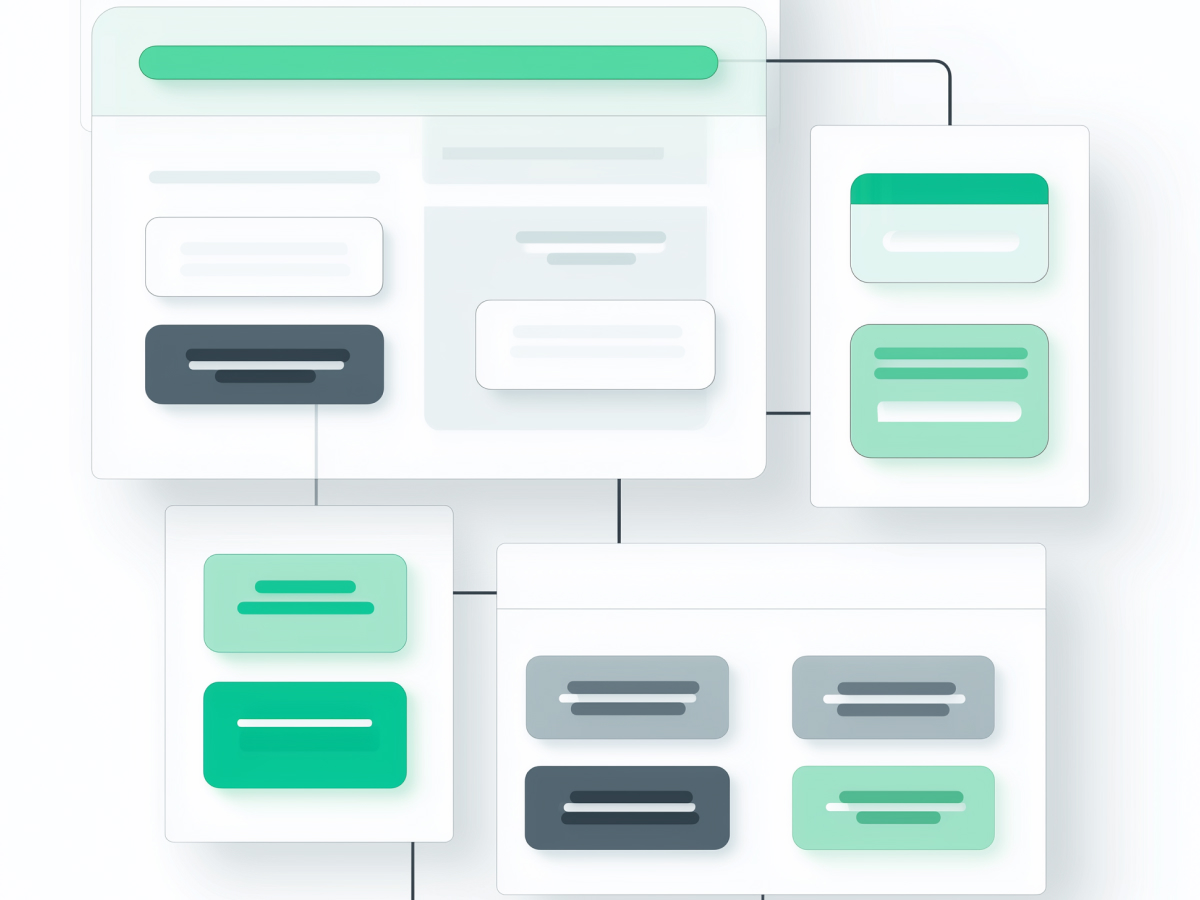
If your product team isn’t using component-driven development by now, you’re likely wasting time on repeat problems. Atomic design breaks the interface into manageable pieces, like buttons, input fields, or forms, and builds them back up from there. Each small unit becomes part of a larger system, which cuts down on redundancy and chaos across teams.
When Brad Frost introduced atomic design, he wasn’t just launching a clever framework. He laid out a practical system, atoms, molecules, organisms, templates, and pages, that matches how humans naturally organize ideas. This structure is scalable. It’s efficient. And it creates a common language between design and engineering, which reduces friction at critical hand-off points.
What gets interesting is scale. Airbnb implemented component-driven development across its workflow and saw a 35% reduction in design-to-dev handoff time. That’s not theoretical, real gains in time and consistency. Their design consistency improved by 20%, which matters when you’re trying to build user trust at every digital touchpoint.
For the C-suite, the real value is clarity. Systematizing design doesn’t slow you down; it accelerates growth. You eliminate “design debt,” speed up go-to-market cycles, and improve the user experience without doubling your development hours. It scales because your team stops re-solving the same problems.
Component-driven development also becomes critical when you’re expanding across markets and platforms. The brand elements stay unified while still adapting to local differences. That’s how you keep control without overextending your creative and engineering teams.
Container queries for adaptable, context-aware layouts
Here’s the thing about traditional responsive design, it focused on screens, not components. That model’s outdated. You can’t just rely on how wide a phone screen is to decide how a component behaves anymore. That’s where container queries come in. They let an element adapt to its actual container, not the viewport. Which makes far more sense if your layout is modular.
Container queries are context-driven. A sidebar component behaves differently inside a modal than it does on a homepage. Before this pattern, you’d have to manually tweak overrides constantly. With container queries, those behaviors are built in. They work where they are, not just on what device they’re shown.
This is functionality that unlocks layered design thinking. You gain flexibility without bloating complexity. Developers stop leaning on brittle hacks to force responsive flexibility and start writing components that work wherever they land.
For executive teams, this translates into speed, scale, and stability. Digital ecosystems now extend across devices, international platforms, embedded systems, you name it. Context-aware interfaces reduce inconsistencies and deliver a smoother experience wherever the user connects.
It also aligns directly with efficiency. You build a component once, and it works everywhere. That means fewer redesigns, less QA flutter, and a more adaptable codebase that improves feature velocity over time. This is how you engineer systems that can grow with your company rather than hold it back.
AI tools streamlining frontend workflows
AI is not about replacing designers or developers. It’s about removing the slow, manual steps that stall product innovation. When you integrate AI into frontend workflows, like what we’re seeing with Figma plugins and GPT-based code generation, you accelerate everything from mockup to deployment.
UX Pilot and other AI-powered tools now translate UI design into code-ready assets. Designers stay in control, guiding styles and layout behavior, while the AI fills in the execution gaps, styling buttons, generating grid structures, or converting components into HTML and CSS. You don’t need a deep coding background to prototype a feature anymore, and that unlocks speed for the whole team.
The data confirms it: using these tools, teams have cut concept-to-code times by up to 80%. That’s time you can reallocate to strategic design, user testing, and iteration. And because the output can be edited, developers remain in the loop, refining the code, integrating APIs, and owning performance.
For leadership, the opportunity here is leverage. More output with fewer blockers, fewer silos, and more consistent quality. Teams stop bottlenecking on handoffs, and you remove the lag between idea and implementation. It also scales predictably. As you expand products or launch across new markets, this AI-driven efficiency means your team stays focused on priorities, user needs, business goals, and innovation, not repetitive work.
Ignore the hype. Focus on utility. The tools are here, and if your teams aren’t using them, they’re already behind.
Lazy loading and code splitting improve performance
Speed makes the difference between engagement and bounce. If your product takes too long to load, users drop off, no matter how polished the interface or how powerful the backend. That’s where techniques like lazy loading and code splitting start to show real business value.
Frameworks like React enable this natively. With lazy() and Suspense, components are only loaded when they’re needed. So instead of loading everything at once, you prioritize what the user actually interacts with. That reduces the initial payload and keeps the app responsive from the start.
For complex applications with multiple routes or feature-rich dashboards, code splitting breaks the app into modular bundles. Routes and views load independently, so large chunks of unused JavaScript don’t clog the experience for users who never access those features.
What does this mean for executive teams? It’s straightforward: better performance equals better results. Users stay longer, interact more, and convert at higher rates. It also lowers server strain and bandwidth use, which translates to infrastructure savings at scale.
This isn’t optional. Modern user expectations are unforgiving. Performance is product quality. Your stack needs to support real-time interactions and instant feedback across networks and devices. Lazy loading and code splitting let you get there without rewriting everything. They’re mature practices, easy to adopt, and give measurable returns. If your tech teams aren’t using them, you’re already behind the standard.
Accessibility-first design for inclusive experiences
Accessibility isn’t a feature, it’s a requirement. Designing with accessibility in mind from the start is faster, cheaper, and more effective than retrofitting later. If your product excludes people with disabilities, you’re not only risking compliance issues, you’re losing users.
The right approach starts with semantic HTML, then applies correct ARIA roles where needed. That includes using role=”progressbar” for progress bars, ensuring labels are linked to form fields, and managing keyboard navigation effectively. These aren’t technical side notes, they determine whether a person can use your product in the first place.
Smart teams combine these best practices with automated tools. AI-enhanced platforms now simulate assistive technology usage and detect structural and semantic issues in ways older test frameworks missed. Context-aware scanning, image alt detection, and heading structure analysis all happen in real-time. BrowserStack and similar tools are showing 60–80% drops in missed accessibility issues when AI is part of the process.
The business case is clear. Compliance with standards like WCAG and Section 508 isn’t just about avoiding lawsuits, it’s about market reach. If your product isn’t accessible, entire market segments are shut out. Governments and large enterprises increasingly demand accessible software from vendors.
Inclusive design is measurable. It’s not a moral statement, it’s operational. It improves usability for everyone, enhances SEO, and demonstrates that you take product quality seriously. Accessibility is functionality. Don’t treat it as optional.
Combined use of grid systems and flexbox utilities
Layout design today isn’t about one solution winning out over the other. It’s about choosing the right tool, per use case. That’s why modern frontend teams combine Grid and Flexbox, it’s purposeful, not redundant.
Grid handles two-dimensional layout like structure and page scaffolding. Flexbox deals with single-axis alignment best suited for component-level control, like spacing, centering, and direction. Most digital products load faster and feel more responsive when the layout system is used smartly across different levels.
Twelve-column grid systems remain the baseline for responsive page construction in 2026. They simplify visual hierarchy, keep spacing uniform, and adapt flexibly across screen sizes. Flexbox utilities work alongside these systems, managing individual elements within cards, menus, or interactive areas where grid would create unnecessary complexity.
For the C-suite, the gain lies in performance and consistency. Teams that design with aligned layout standards cut back dramatically on QA feedback loops and interface regressions. It’s easier to maintain a visual language across products, which reflects directly on perceived brand quality.
Layout decisions aren’t cosmetic. They affect everything from development timeframes to content strategy and internationalization. Good layout systems scale across teams, products, and regions without multiplying design debt. Flexbox and Grid together provide that kind of stability. Adopt both intentionally, and you avoid a lot of unnecessary rework later.
Dark mode and theming with CSS variables
Dark mode is no longer a trend, it’s expected. Users want interfaces that adjust to their preferences and operating system settings. With CSS variables, implementing theme switching is not just simpler, it’s scalable and stable across large applications.
The method is effective. You define your core color variables in the :root selector. Then you override them via a data attribute, or system preference control like prefers-color-scheme. No duplication. No scattered color values. Just a centralized theme structure that adapts instantly without rewriting the UI.
For teams managing multiple brands or product lines, this approach saves time. You can adjust themes across an entire suite of products by changing a few tokens. It’s efficient, low-risk, and minimizes styling bugs. Theme switching also works seamlessly within design systems or frameworks like Tailwind and MUI, both of which support variable-based theming.
From an executive perspective, this aligns tightly with brand consistency and platform reach. Visual cohesion at scale isn’t achievable through manual styling. You need modular, global theming that ensures visual parity across mobile, web, and embedded platforms.
If your product doesn’t support dark mode by default now, it will look out of date, fast. CSS variables get you there without tech debt.
Progressive disclosure enhancing user experience
Most users won’t learn your full product in one session. Progressive disclosure structures the experience so that users see what’s essential first, then access deeper functionality as needed. It respects cognitive load, reducing friction in the onboarding and feature discovery process.
Designers use modals, accordions, tabs, and collapsible sections to implement this pattern. These components delay complexity and let users expand as their familiarity grows. It’s measurable: teams applying this approach have reported smoother onboarding, lower abandon rates, and fewer feature-related bugs during QA.
For high-complexity platforms, enterprise dashboards, admin panels, user management tools, progressive disclosure makes usability manageable. You don’t overwhelm new users. At the same time, experienced users retain access to advanced controls without losing speed.
From the C-suite’s point of view, it’s about increasing retention and shortening the time to user proficiency. If your product feels overwhelming at the first click, you’re leaking acquisition cost. Progressive disclosure strategically manages attention and engagement, two fundamentals that affect every KPI from trial conversion to feature adoption.
This isn’t hiding features. It’s organizing them according to logic that respects experience levels, user intentions, and goals. Better structure always scales better.
Mobile-first designs with thumb-friendly and scalable layouts
Mobile is the default. If your design process doesn’t begin with the mobile experience, you’re already trailing the way users interact with digital products today. A mobile-first approach isn’t about shrinking desktop designs, it starts with what actually fits mobile behavior and scales up from there.
Touch interactions inform every layout decision. Research shows the average fingertip width is around 1.6 to 2 cm, with thumbs extending around 2.5 cm. Based on this, best practices are clear: interactive elements need to be at least 1 cm × 1 cm, with 12 mm targets in screen corners and 7 mm in the center. These guidelines reduce mis-taps and improve reliability without complex recalibration.
About 75% of users navigate primarily with their thumbs. Prioritizing touch zones within reach and minimizing crowded interactions improves usability by a measurable margin. In fact, optimizing for thumb regions can reduce interaction errors by as much as 37%. That’s a direct boost to engagement and satisfaction.
There’s also significant value in responsive, scalable typography. Using CSS clamp(), developers can define minimum, ideal, and maximum sizes for text across different screens. This avoids breakpoints and keeps content readable on every device without manual tuning. Combine that with container-based scaling units like cqi, and you gain even more control for modular components.
For executives, mobility means reach, and mobile usability directly affects conversion, retention, and product loyalty. Optimization here isn’t cosmetic. It influences how quickly users understand value and how confidently they take action. That benefit compounds as you scale across demographics and global markets.
Design systems and reusable component libraries accelerate scalability
Design systems are no longer optional, they’re infrastructure for serious product organizations. When teams rely on reusable components, consistent styles, and shared naming conventions, they ship features faster with fewer bugs. Fragmentation drops. Alignment improves. And the entire organization speaks the same product language.
Tools like Figma help design teams maintain a shared source of truth by turning tokens, variables, and patterns into published libraries. This ensures that each product team, across departments or regions, is building from the same base components. Semantic naming, values like color-warning instead of color-yellow, enables clearer collaboration between designers and engineers.
Frontend teams use Storybook to create, test, and isolate components before they’re pushed into the main application. Storybook supports real-time previews, versioning, and pixel-level testing. It also allows engineers to develop independently of business logic, so design and implementation don’t block each other.
For C-level leaders, this means faster development cycles and lower operational risk. A mature design system reduces back-and-forth between departments by pre-solving design ambiguities and reducing the need for redundant code. You can onboard faster, roll out updates consistently, and adapt branding across markets without inconsistency.
As the product landscape grows, component libraries and design systems are what keep velocity from turning into unreliability. You scale efficiently when your core UI logic doesn’t have to be reinvented every time. That consistency affects everything from developer onboarding speed to customer trust in your brand.
State management with signals and context API balances complexity
State management determines how quickly a product can respond to user actions and how maintainable the codebase remains as it grows. In 2026, the choice isn’t between good and bad options, it’s about applying the right level of complexity at the right time. Signals and the Context API are two patterns teams are leaning on to get there.
The Context API is simple and effective when you need to pass values across component trees without prop-drilling at every level. It’s best suited for lightweight global states, user authentication, language preferences, theme selectors. It keeps things lean and readable.
Signals, on the other hand, introduce fine-grained reactivity. Instead of re-rendering large component trees for every state change, signals update only what’s necessary. This improves runtime performance, especially in interactive apps where speed and responsiveness are non-negotiable. For developers working at scale, this granularity translates to better user experience and more predictable behavior.
For decision-makers, this is about trade-offs. Over-engineering state leads to slower onboarding for developers and inflated maintenance costs. Under-engineering it results in sluggish apps and messy code. Teams should default to local state, escalate to Context, and use Signals when render performance can’t be compromised.
This discipline keeps applications fast and developers autonomous. It also means your tech stack adapts cleanly as you move from MVP to enterprise-grade deployments without rewriting core architecture.
AI-enhanced accessibility testing and code generation
AI is changing how software teams build for inclusivity. Instead of relying entirely on manual QA or preset static rules, AI-powered accessibility tools simulate real-world use cases, helping teams catch flaws that traditional testing often overlooks.
Modern platforms now use visual analysis, natural language processing, and behavior-based simulations to detect missing alt text, inefficient heading structures, and poor interaction flows. This makes the testing process deeper and more aligned with how people actually use the product. The result is fewer blind spots.
BrowserStack and similar platforms are reporting a 60–80% drop in missed accessibility issues when AI is integrated into the testing workflow. Those are not small gains, they translate directly to better compliance outcomes and reduced risk exposure, especially in regulated industries like healthcare, finance, and government.
On the development side, AI-powered plugins for tools like Figma now convert designs into usable frontend code, HTML, CSS, and functional component structures. Designers who aren’t engineers are building deployment-ready components at speed. Developers can then fine-tune performance, behavior, and integration.
For executives, this means moving faster with higher quality. AI accelerates output without sacrificing accessibility or compliance. It lowers entry points for production, improves coverage, and puts product teams in a stronger position to scale responsibly. The cost efficiency is immediate, but more importantly, you’re shipping products that work for everyone. That’s good business and smart product strategy.
CSS scoping and tree shaking for maintainability and efficiency
Scalable frontend development depends on discipline in how styles are written and how code is deployed. Without that, you accumulate technical debt fast. CSS scoping and tree shaking are two patterns that address different sides of the same problem: clean, modular, and efficient code.
CSS scoping methods like BEM (Block, Element, Modifier) and CSS Modules offer clear naming structures that prevent style conflicts. Each component maintains its own isolated styles, so engineers can work in parallel without unintended overrides. This reduces regressions and UI bugs, which saves time during QA and deployment.
Tree shaking targets performance. It removes unused JavaScript during the build process. ES modules expose which parts of your code are in use, allowing bundlers to safely eliminate what isn’t being imported. This isn’t abstract improvement, it cuts bundle sizes, speeds up load times, and reduces bandwidth usage. Marking files as side-effect-free in package.json tells the bundler it’s safe to remove them if unused, increasing efficiency.
From an executive perspective, the value is operational. Smaller bundles translate to faster time-to-interaction for users, lower infrastructure costs, and better Core Web Vitals performance, all critical for SEO and user retention. Clean styles also reduce engineering overhead, especially when maintaining shared UI libraries across multiple products.
Teams that adopt CSS scoping and tree shaking early stay agile. They spend less time debugging layout problems and more time shipping features. Over time, those decisions mean faster product delivery and better customer-facing performance.
AI-generated layout suggestions to reduce repetitive design efforts
Design decisions used to stall when teams got bogged down in repetitive layout assembly. That’s now changing. AI-powered tools, like Figma Make and other generative design platforms, assist teams by offering layout suggestions based on predefined patterns and design inputs. The output isn’t locked, designers stay in control, but the initial structure is created much faster.
These suggestions aren’t random. They’re guided by brand styles, spacing rules, and component logic set by the team. A designer prompts the tool, and it generates a valid structure that adheres to those constraints. You refine the result, swap content, tweak visuals, but you don’t spend time rebuilding structures from scratch. Visual direction remains human-led.
This accelerates early-stage design decisions and reduces back-and-forth between design and product teams. When the baseline is already done with AI assistance, iterative improvements happen sooner, and the build cycle starts earlier. It also improves cross-functional clarity, everyone sees layout and logic unfold at the same time.
To leadership, this means design teams spend more time solving real UX challenges and less time on static wireframing. The pipeline from concept to approval gets shorter. Speed goes up without compromising brand consistency or design logic.
This also prepares your organization to scale design operations without linearly scaling headcount. When teams are no longer blocked by redundant layout work, they’re more focused, more effective, and more capable of managing parallel project tracks.
Fluid typography scaling with clamp() and container units
Typography isn’t just visual, it affects clarity, usability, and accessibility. In 2026, fluid typography using clamp() and container-relative units gives teams precise control over how text scales across screen sizes and component contexts.
The CSS function clamp() lets you define a minimum, preferred, and maximum font size in one declaration. This removes the need for device-specific breakpoints and adapts text based on available space. It delivers better readability across a wider range of screens, without compromising accessibility or macro layout integrity.
Container-based units like cqi (container query inline) go a step further. They let text scale relative to the component’s container, not just the viewport. So, a text block inside a card or sidebar adjusts based on that component’s size and context. This model is especially effective in modular systems where the same element appears in different areas with varied constraints.
For leadership, this means fewer visual bugs across layouts and devices. It also means more users get a consistent, legible reading experience without added localization or design overrides. Typography doesn’t need to break when your content expands globally or supports non-Latin character sets.
Fluid scaling improves accessibility compliance, particularly on mobile, where system zoom and user-preferred font settings need to be respected. Smart use of rems combined with clamp() ensures that scaling honors both system preferences and layout constraints.
This approach gives engineering and design teams more precision and less fragility in how content appears. It strengthens UX quality while reducing support overhead for inconsistent font rendering across devices.
Versioning and theming with tools like turborepo for evolving design systems
Design systems evolve. If they aren’t versioned and structured to support change, they break. Managing updates, theme changes, and cross-project coordination takes more than good naming, it requires a framework.
Turborepo and NX enable monorepo setups that keep your entire design system and frontend codebase in one place with controlled versioning. That means shared components stay aligned across products and updates are traceable. Changesets then allow teams to version updates cleanly, segmenting changes by impact and triggering automated publishing workflows through CI tools like GitHub Actions.
On the theming front, pairing MUI’s structured component system with Tailwind’s utility-first styling gives teams modular control. MUI handles accessibility and material principles out of the box. Tailwind focuses on rapid style composition through variables. Combined with CSS variables defined at the root, switching between themes (light, dark, branded variants) becomes instant and scalable.
For executives, this reduces operational risk. When a product line needs visual refresh or regional theming, changes happen quickly without fragmenting your frontend. Plus, if your product portfolio spans countries, brands, or compliance environments, centralized version control ensures that updates propagate correctly, with no last-minute surprises.
Overall, this approach supports growth. Teams move faster, design standards remain consistent, and the system remains flexible enough to support design changes without rewriting the architecture every quarter. That’s how sustained velocity looks in practice.
Recap
The way digital products are designed and built in 2026 reflects something deeper than just new tools or syntax, it reflects a shift in how smart teams think about scale, performance, and user trust. Backend may fuel the engine, but it’s the frontend that defines how people experience your product. That experience has to be fast, inclusive, responsive, and consistent across every platform.
Design systems, component thinking, AI-accelerated workflows, and accessibility-first practices aren’t just technical upgrades. They are operational upgrades. They reduce waste, lower risk, and extend the life of your product teams’ work. Executives and product leaders who prioritize these patterns are seeing real returns in delivery velocity, brand consistency, and product usability.
You don’t need to chase trends. You need to implement the practices that keep your digital experiences scalable, sustainable, and aligned with user expectations. The companies that perform best over the next five years will be those who invested now in smarter systems, not bigger teams.
Shipping clean, adaptable interfaces isn’t optional anymore, it’s the baseline for winning.