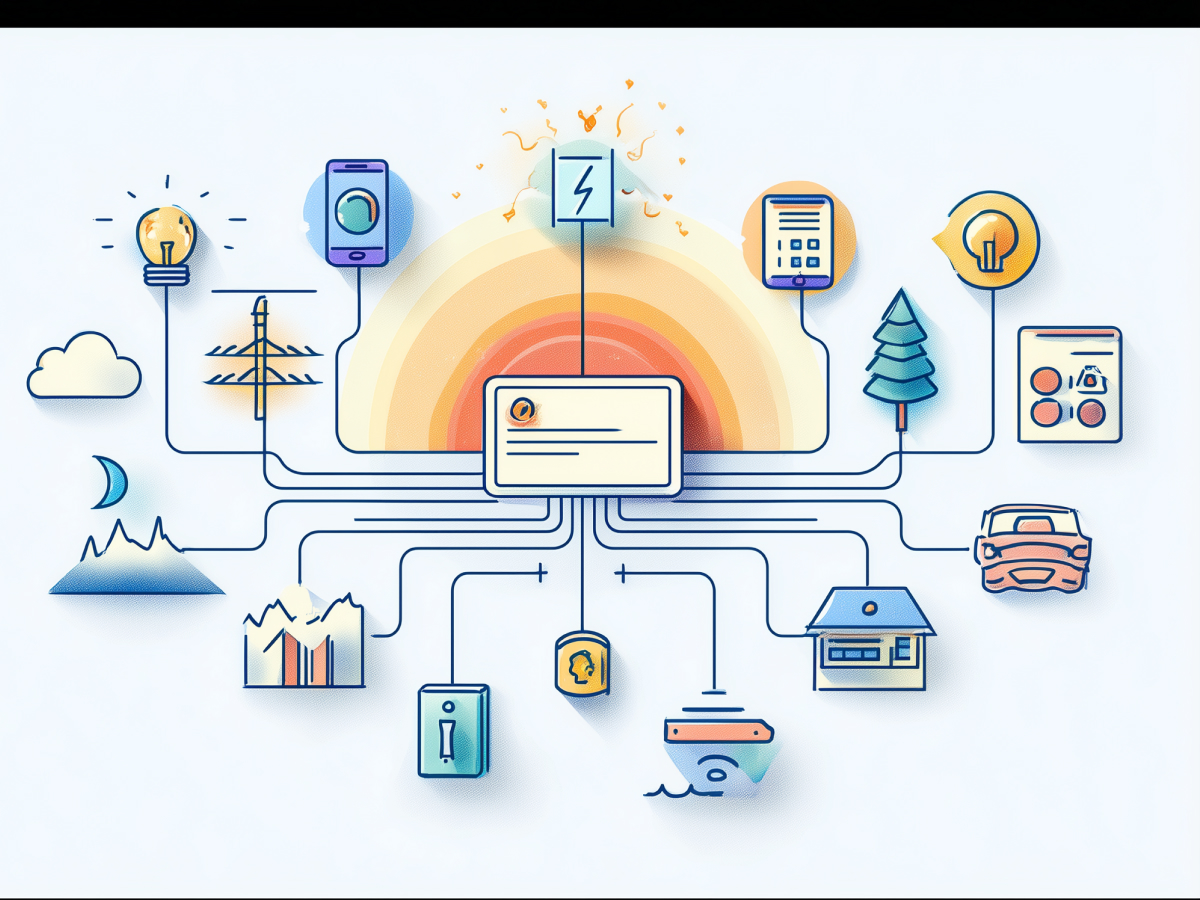
Unified customer experience (CX) is critical for meeting evolving customer expectations
When customers interact with your company, they don’t think in silos. They see one brand. So if your sales team has no idea what your support team promised, or your marketing messages aren’t aligned with the actual product experience, people notice. And they walk. That’s lost revenue. That’s reputation erosion. A unified customer experience solves this problem by bringing everything together, channels, teams, data, messaging. One system. One experience.
This is about surviving in an environment where the pace of change is accelerating, and customer standards are increasing quarter by quarter. Unified CX links your digital, physical, and human touchpoints into one seamless journey. And it doesn’t just smooth out operations, it gives your business the ability to personalize every interaction with context derived from centralized data.
C-suite leaders should care, not because it’s a shiny new concept, but because it works. Delivering cohesive experiences boosts satisfaction. It improves efficiency. It builds loyalty, loyalty that scales. If your customer feels known, understood, and guided anywhere they engage with you, they’ll keep coming back. That’s leverage.
Customers expect consistent and uninterrupted interactions across all channels
Here’s the reality: customers have stopped tolerating fragmented interactions. They don’t want to explain themselves five times to five different departments. They don’t want to start a live chat, switch to a phone call, and get asked for the same identification all over again. These aren’t minor complaints. They become big reasons not to return.
Data makes that clear. 79% of customers expect consistency across departments. But more than half say it feels like they’re engaging with multiple disconnected units rather than a single company. That’s a problem, and it’s not just UX. It’s revenue exposure.
Meet customers where they are, without making them repeat themselves. That means systems need to talk to each other. Front-line reps need access to complete interaction history. And every department needs to operate on the same data foundation. This isn’t optional anymore. It’s basic table stakes in 2024.
As an executive, you don’t need to chase perfect alignment on day one. You need to build systems that evolve toward clarity, for your customers and your employees. Because the moment a competitor provides that seamless experience and you don’t, the customer won’t email you about it. They’ll just leave.
Understanding the customer journey is the foundational step in building a unified CX strategy
You can’t improve experiences you don’t fully understand. Too many businesses jump into tech integration or campaign fixes without actually knowing how customers engage with them. That’s a mistake. Your first move should be mapping what your customers do, from first contact, to purchase, to support. Every step, every click, every conversation. This tells you where friction exists, what’s working, and where you lose people.
Start with clear customer personas based on actual data, not assumptions. Look beyond demographics. Understand behaviors, motivations, pain points, and communication preferences. Then map their journeys. Track how these different personas interact with your brand across various stages. This gives you clarity on the full experience, not just snapshots.
Executives need to treat this as operational intelligence. Journey maps aren’t marketing tools, they’re business tools. They show where performance improvements will create the most value. For example, if a major drop-off is happening during onboarding or checkout, that’s not just a bad experience, it’s a missed conversion, and a signal to act.
Use input from support teams, NPS surveys, abandoned carts, bounce rates, any data that reveals where customers are hitting dead ends. The gains come from identifying where critical segments are struggling and streamlining those paths. Prioritizing based on both emotional friction and commercial impact will deliver fast, measurable returns.
A centralized and synchronized data infrastructure is essential to deliver seamless customer experiences
Disconnected systems create disconnected experiences. If your CRM doesn’t talk to your support platform, or your point-of-sale data is locked in another system, you’re not giving your teams, or your customers, what they need. Customers can feel when your systems are scattered. And they feel it in broken conversations, inconsistent offers, and repeated questions.
The fix starts with a real, centralized view of your customer. That’s not just a report. It’s a shared, live dataset that marketing, sales, support, and leadership teams all access without friction. A Customer Data Platform (CDP) can deliver this clarity. It pulls together first-, second-, and third-party data and creates unified customer profiles that update in real time.
From a leadership level, this brings major value. It simplifies decision-making, accelerates campaign readiness, improves personalization accuracy, and reduces resource waste. You also can’t run any kind of consistent AI-powered experiences if your data is split across platforms that don’t integrate.
Connecting your CRM, POS, and support tools is step two. These systems need to communicate instantly, not hours later. Real-time data syncing ensures no rep is referencing outdated information, and your offers, inventory, or support efforts remain current. That lowers handling times and prevents service errors that cost you brand trust and customer value.
Don’t underestimate the risk of data inconsistency. Overlooking data integrity or gaps in synchronization will lead to poor personalization and operational mistakes. Before you invest heavily in platform tools, assess your data hygiene, structure, and accessibility across departments. Leaders who get this right gain speed, customer clarity, and long-term competitive edge.
Consistent branding and hyper-personalized experiences are key to cultivating trust and customer engagement
When you look at customer loyalty and long-term brand value, two forces are working in parallel: consistency and personalization. You need both. Consistency builds trust. Personalization makes people feel understood. If your brand voice shifts from channel to channel, or your content feels irrelevant to the person receiving it, the experience breaks down.
Consistency isn’t hard, but it does require discipline. That means every touchpoint, email, live chat, website, packaging, needs to align with your visual identity, tone of voice, messaging hierarchy, and service standards. You don’t want your support team saying one thing while your marketing materials say something else entirely. Set clear brand guidelines, and distribute them through a digital asset management system so teams can stay aligned without guessing.
At the same time, personalization’s role here is undeniable. Customers want relevancy. They want speed. And they expect businesses to respond to their actions and preferences instantly. AI allows for that. Not theoretical personalization, actual, behavior-driven, real-time adjustments to messaging, offers, and service. Look at customer signals, segment intelligently, and let the system adapt, not the other way around.
The delta in outcomes is massive. If someone sees a generic message after clearly showing intent in another channel, they disconnect. If instead, the experience picks up right where they left off, you increase engagement, reduce cognitive load, and drive conversion.
Executives should monitor not just whether personalization exists, but whether it is useful. Recommending irrelevant products or delivering misaligned messages is worse than doing nothing. Hire teams who understand responsible AI deployment, and ensure performance is measured not by output volume, but by outcome relevance.
Seamless transitions between channels are crucial to maintaining customer satisfaction and loyalty
Here’s what customers want: the ability to start an interaction on one channel and continue it on another, without having to start over. That’s not complex in theory, but in practice, most systems still aren’t built to support it. And the result is dropped conversations, disconnected steps, and lost momentum for your customer.
In unified CX, channel transitions are treated as part of the experience, not disruptions within it. This requires real-time synchronization across platforms and tools that orchestrate interactions across SMS, email, live chat, apps, in-store systems, and more. Agents, whether human or virtual, need context, current status, previous interactions, customer intent, and any open requests.
From a strategic standpoint, this gives your business better resilience. Customers aren’t limited to working within your system’s structure. They move based on convenience, device, environment, urgency. You either support that behavior or you don’t survive their comparison with a competitor who does.
Channel orchestration is not just a tech project. It’s a product question, a training requirement, and a service philosophy. Leaders have to think about where transitions most often occur, what systems control those transitions, and how to unify workflows across departments. Front-line employees need the same visibility as backend teams. Expecting manual workarounds to fill integration gaps is a short-term fix that creates long-term inefficiencies.
Integrated technology platforms form the backbone of unified CX operations, enabling efficiency at scale
Disjointed tools don’t create full customer visibility. If your contact center runs on one system, your CRM on another, and marketing on yet another, none of them fully aligned, you face an experience gap that customers notice. Building a unified customer experience isn’t just about process; it’s about having a technology stack that supports it from end to end.
By investing in a cohesive customer experience management (CXM) platform, you reduce redundancy, simplify internal workflows, and ensure every interaction comes from one clear, consistent source of truth. Features like real-time communications (CPaaS), contact center capabilities (CCaaS), content orchestration, and CRM must be integrated, not just bolted together. The more fluid the data and interface, the better equipped your teams are to respond to any customer interaction without missing context.
For C-suite leaders, the strategic value lies in visibility and control. An integrated platform allows you to track operational efficiency, customer sentiment, and revenue-linked outcomes in real time, bringing your entire customer ecosystem into scope. This operational clarity supports faster decision-making and helps eliminate silo-based guesswork that undermines performance.
Vendor proliferation is a hidden liability. Unchecked, it leads to fragmented data governance, platform incompatibility, and spiraling maintenance costs. Executives should assess the feasibility of consolidating tools into platforms that are purpose-built for unified CX. Avoid building tech stacks that turn into operational liabilities.
AI and automation are key enablers in enhancing the efficiency and responsiveness of the customer experience
You’re not optimizing CX at scale without automation. Manual workflows can’t keep up with customer demand, personalization complexity, or the real-time decision-making required in a system today. AI plays a central role in removing repetitive work, enabling proactive service, and making experiences instantly adaptive to customer behavior.
AI-driven automation can route tickets intelligently, trigger messages based on customer actions, or flag potential churn in real time. Natural language processing lets systems understand intent and emotion, not in vague terms, but in ways that your support and sales teams can use to respond purposefully. These functionalities reduce service times, personalize interactions, and raise the overall responsiveness of your operation.
The most effective use of AI in CX doesn’t replace people, it supports them. It enhances decision speed and precision while allowing talent to focus on solving meaningful business issues. For executives, this translates into scaled operations with smart allocation of resources and preserved (or improved) service quality.
AI’s value depends entirely on the quality of inputs and alignment with your CX goals. Train your models using clean, relevant, and recent data. Deploy solutions with clear governance, ensuring they reflect your brand’s actual service standards. And measure impact rigorously, not just on agent performance, but on customer satisfaction and conversion outcomes.
Cross-departmental collaboration and shared accountability are essential for sustaining a unified customer experience
You can’t deliver a truly unified experience if your teams operate in isolation. Marketing, sales, customer support, product, and IT all contribute to the customer journey, but if they’re measured against separate goals or working with different tools, the customer ends up dealing with the disconnection. Companies that scale effective CX know that it’s not just a systems problem, it’s a structure problem.
Cross-functional CX teams solve this by breaking down operational silos. These teams align around shared customer goals rather than departmental KPIs. They’re responsible for identifying friction points, iterating on experience design, and executing with consistency across channels. When responsibility is distributed this way, there’s less blame-shifting, faster decision-making, and clearer focus on the actual outcome: the customer relationship.
To support this, leadership should create a shared CX charter. It should define roles, establish decision-making authority, and clarify which outcomes matter. Focus on a small group delivering tangible results before scaling to the wider organization. Additionally, create a single dashboard that connects performance across key functions, support resolution times, marketing effectiveness, sales conversions, and customer satisfaction, so teams are aligned on what success looks like and who’s owning each part of it.
Training is central to maintaining cohesion. Initial onboarding should explain how teams fit into the broader CX strategy, but the real impact comes from continuous skill development. On-demand training modules, playbacks of customer interactions, and scenario walkthroughs all help teams stay sharp. Make learning part of the culture, not a one-time checklist.
Executive sponsorship is not optional. Without clear top-down alignment, functional leaders won’t prioritize unified goals over departmental targets. Also, tying performance incentives to shared customer outcomes, such as NPS, churn rate, or customer lifetime value, ensures everyone is working toward the same results.
In conclusion
The way customers experience your brand now defines your business more than your product does. Performance, pricing, and positioning still matter, but they’re not enough if the experience feels disconnected. Unified CX isn’t a trend or a tech upgrade. It’s an operational shift. One that aligns data, teams, and tools around what customers actually value: clarity, consistency, and relevance.
Building this kind of experience takes work. It requires leadership to cut through legacy systems, realign incentives, and back platforms that give teams shared visibility. But the returns are measurable, higher retention, faster response, stronger loyalty, and more efficient growth.
If your teams are still working in silos, you’re leaving too much on the table. Connected experiences start with connected organizations. The companies built to win long-term are not the ones with the most tools, they’re the ones that know how to use them in sync.
Now’s the time to make that shift operational. Not reactively, but with intention.