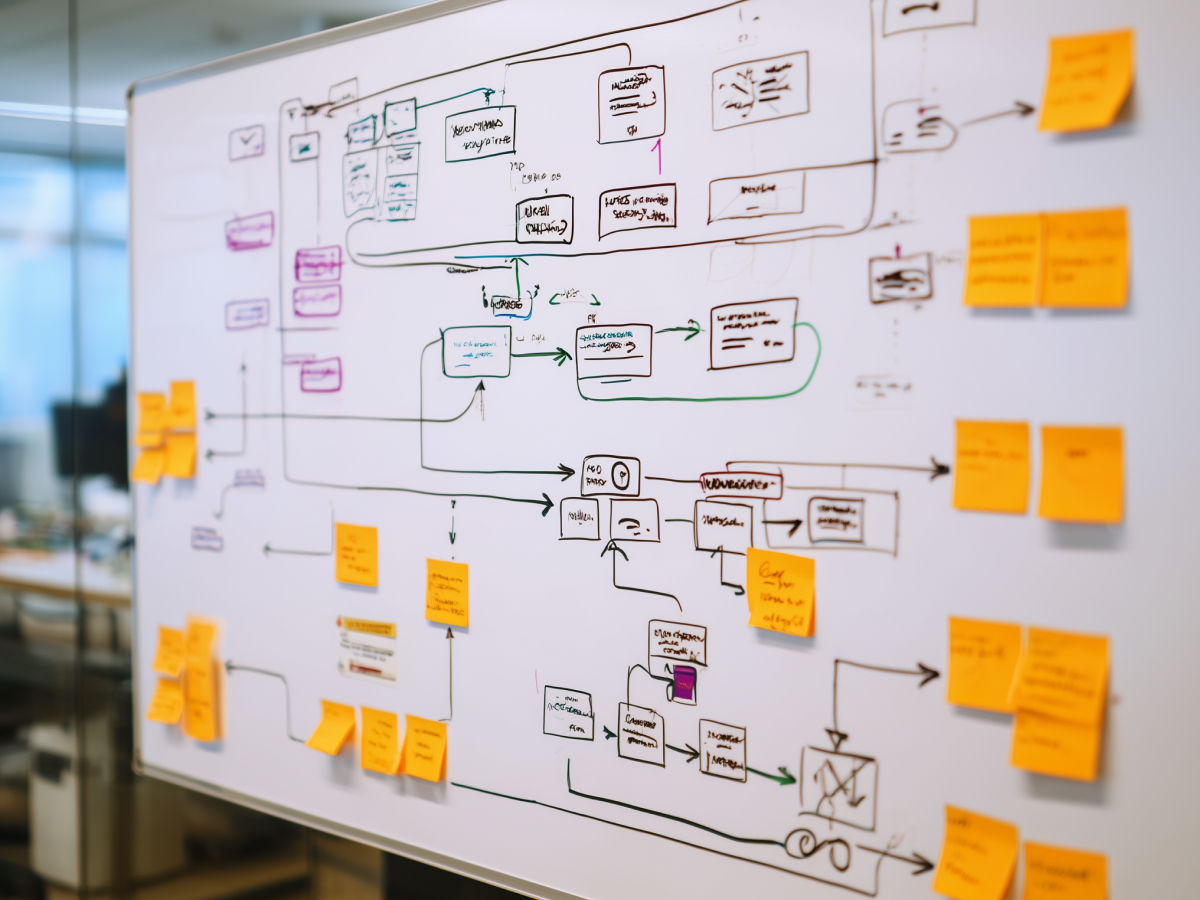
Agile defines a mindset built around adaptability and continuous improvement
Agile is a mindset. It’s about building teams and systems that expect change and respond to it fast. Instead of freezing plans months in advance, Agile focuses on rapid execution and adjustment. Leadership’s role is to make iteration part of the culture.
This approach works because it aligns product delivery with reality. Markets, customer needs, and technologies evolve, often faster than planned. Agile teams thrive in that environment because they deliver early, collect feedback, and adjust course. That constant loop, build, test, learn, refine, is what turns uncertainty into progress.
For executives, the Agile mindset is a shift in governance. It demands trust in teams to self-organize and a willingness to prioritize results over perpetual control. It values adaptive planning and data-informed decision-making. When leadership models this behavior, improvement becomes systemic, it scales naturally across teams and operations.
Agile also acts as a performance amplifier across an organization. Studies, such as repeated findings from VersionOne’s State of Agile reports, show that companies adopting Agile principles see notable increases in customer satisfaction and time-to-market speed. Those gains are a result of continuous delivery, transparency, and cross-functional teamwork, not rigid adherence to a toolset. Agile is less about doing more meetings, and more about creating momentum that sustains itself through shared purpose and measurable value.
Scrum provides structure through defined roles, time-boxed sprints, and systematic ceremonies
Scrum takes the Agile philosophy and gives it shape. It turns principles into a structured framework that ensures consistency in execution. Work is organized into short, time-boxed intervals, usually one to four weeks, called sprints. Each sprint ends with a concrete outcome: a product increment ready for release or validation.
The framework is defined by three key roles. The Product Owner manages priorities and ensures that the work aligns with business goals. The Scrum Master facilitates processes, removes blockers, and maintains team focus. The Development Team executes tasks with autonomy, ensuring that commitments are grounded in realistic capacity. Daily standups, sprint reviews, and retrospectives keep feedback and communication flowing.
Scrum works best in complex or feature-heavy product environments, places where predictability, visibility, and accountability matter. For C-suite executives, Scrum provides measurable rhythm. Velocity metrics, sprint commitments, and burn-down charts turn progress into quantifiable data executives can trust. That data gives leaders real-time insight into delivery trends, helping with forecasting, resource allocation, and risk management.
At scale, Scrum requires balance. The structure keeps teams aligned, but strict implementation can become restrictive, especially when teams operate across multiple time zones or face shifting priorities. Leaders must encourage adaptation without losing discipline. Some of the fastest-moving organizations use “lean Scrum”—stripped-down ceremonies with a focus on outcome.
A 2023 meta-analysis of 47 academic studies reinforced this reality: in practice, teams rarely use textbook Scrum. They customize it, relax unnecessary rules, and integrate concepts from Kanban and other frameworks to match operational demands. This kind of contextual agility, adjusting the method while preserving the intent, is the hallmark of successful leadership in modern engineering organizations.

A project in mind?
Schedule a 30-minute meeting with us.
Senior experts helping you move faster across product, engineering, cloud & AI.
Kanban promotes continuous delivery and flexibility via visual management and work-in-progress controls
Kanban represents flow without friction. It focuses on maintaining steady progress instead of enforcing cycles or ceremonies. The goal is efficiency, tasks move smoothly from start to finish without unnecessary interruptions. Work is visualized on a shared board where the team tracks every item through defined stages. Nothing moves forward until capacity allows. That discipline in managing work-in-progress (WIP) creates predictability and structure without slowing momentum.
This method builds transparency across teams and functions. Executives see real-time progress, not an abstract report weeks later. Teams detect bottlenecks early, if one column on the board starts filling up, it signals constrained capacity or dependency issues. Resolving those in the moment improves flow and output quality.
Kanban thrives in dynamic, interrupt-driven environments, support operations, infrastructure management, and maintenance work, where pre-defined cycles can slow responsiveness. It is particularly effective for distributed or global teams that need autonomy and asynchronous coordination. Decisions are based on system flow and performance metrics: cycle time, lead time, and throughput. These indicators highlight whether a team is delivering consistently and efficiently.
For executives, Kanban offers flexibility without chaos. Work can start or stop as priorities evolve. Managers focus on throughput and quality rather than ceremony adherence. The result is lean, continuous delivery with less administrative overhead.
Industry data and numerous operational reports confirm these advantages. Companies that adopt Kanban often report shorter delivery cycles and measurable gains in workflow transparency. These results emerge because work-in-progress limits favor throughput stability, giving teams clarity and control instead of overload.
The choice between Scrum and Kanban hinges on governance, cadence, and the nature of the work involved
Scrum and Kanban are not competitors, they are two ways to operationalize Agile principles. The right choice depends on the type of work, the structure of the teams, and the company’s operating environment. Scrum works best for product development teams where deadlines, coordination, and product increments matter. Kanban fits contexts where flexibility and ongoing responsiveness are the real competitive edge, such as support or infrastructure teams.
Scrum defines governance through formal roles and ceremonies. Kanban does it through transparent policies and shared accountability. Scrum emphasizes time-boxed cycles, giving teams a predictable schedule for delivery and review. Kanban eliminates fixed schedules and uses flow management to trigger action. Each model offers a control mechanism that can be adjusted to fit a company’s priorities.
For executives, the trade-off is between structure and flexibility. Scrum is valued for its predictability, end-of-sprint increments, standard metrics such as velocity, and built-in checkpoints. That predictability helps manage stakeholder expectations. Kanban, on the other hand, emphasizes real-time adjustment. It allows teams to respond to shifts immediately without waiting for the next iteration.
The decision framework should mirror the organization’s operating rhythm. Highly coordinated projects benefit from Scrum’s cadence and governance. Workflows requiring rapid response and minimal ceremony align better with Kanban. Most large organizations eventually blend the two, developing hybrid systems that match unique patterns of collaboration.
Research from 2023 reviewing 47 studies supports this adaptive approach. The findings show that the highest-performing teams customize their frameworks based on work type and business context instead of following one model rigidly. That insight underscores a critical leadership principle in modern engineering management: agility means context awareness, not framework loyalty.
Hybrid frameworks, such as Scrumban, combine the strengths of Scrum and Kanban for a balanced approach
Hybrid frameworks bring discipline and adaptability together. Scrumban blends Scrum’s structured planning and defined roles with Kanban’s continuous flow and visualization. It keeps sprints or planning cycles where they matter most, major features, releases, or initiatives, and runs ongoing flow for operational or maintenance work. The result is steady output, clear visibility, and reduced process friction.
Executives value Scrumban because it integrates predictability with flexibility. It provides a rhythm for key deliverables while granting autonomy for teams to manage dynamic workloads. Product teams can use sprint planning and backlog refinement to stay aligned with business priorities, while operational teams leverage Kanban’s flow metrics to maintain balance and throughput. This combination minimizes ceremony fatigue while preserving accountability and measurable outcomes.
Governance under hybrid models becomes more holistic. Leadership can track progress using shared metrics, velocity for Scrum-driven teams and cycle time, lead time, or WIP limits for those operating under Kanban. Reporting, risk management, and release planning remain consistent across both. The organization gains unified visibility across its portfolio without forcing every team into the same mold.
As companies scale across regions and functions, hybrid adoption strengthens collaboration and execution speed. Teams operating with different cadences remain aligned through shared governance and tool integration. This approach supports both creative and operational work, maintaining a single view of value flow across the enterprise.
Data supports this evolution. A 2023 analysis reviewing 47 studies found that hybrid implementations consistently outperform rigid single-method use in distributed environments. Companies realized faster adaptation to changing priorities and greater stakeholder satisfaction when frameworks were blended rather than standardized. Leaders who treat frameworks as evolving systems, not fixed doctrines, create durable delivery ecosystems capable of changing with the business.
Team geography strongly influences the suitability of agile frameworks
Geography determines how teams communicate, collaborate, and deliver. For globally distributed organizations, choosing between Scrum and Kanban often depends on time overlap and communication patterns. Scrum works best when teams share time zones or can maintain synchronous collaboration. Its ceremonies, daily standups, sprint reviews, and retrospectives, depend on real-time interaction and quick alignment decisions.
In contrast, distributed or offshore teams benefit from Kanban. It supports asynchronous workflows and continuous visibility. Work moves forward through well-defined policies and shared digital boards. People across regions can pick up tasks and hand them off without waiting for others to be online. This independence of execution helps maintain continuity across time zones and reduces coordination delays.
Executives leading multi-regional operations should view team distribution as a core design factor in framework selection. For example, nearshore development teams aligned in working hours can operate effectively under Scrum, focusing on iterative feature development and sprint-based delivery. Offshore maintenance or infrastructure teams, working in staggered shifts, may operate more efficiently under Kanban, focusing on throughput and rapid issue resolution.
A hybrid arrangement often emerges in large enterprises. Product-focused teams might continue using lean Scrum, while operations or support teams run Kanban. The alignment happens at the portfolio level through unified performance tracking, shared dashboards, consistent reporting structures, and synchronized goals. This keeps leadership informed across diverse functions while preserving the autonomy required for each team to succeed in its context.
Research and operational case studies repeatedly confirm that aligning methodologies with team geography enhances productivity and reduces delivery risk. Organizations adopting framework variations based on time-zone realities consistently report smoother coordination, faster resolution cycles, and stronger cross-regional cohesion. For C-suite leaders, recognizing geography as a performance variable, not just a logistical factor, is critical to scaling Agile effectively across a global workforce.
Effective framework selection should prioritize outcomes, flexibility, and contextual alignment
Frameworks only matter when they help deliver outcomes. The focus for leaders should be on results, speed, reliability, cost efficiency, and risk management, not strict adherence to Scrum, Kanban, or any single methodology. The best system is the one that fits the organization’s structure, the nature of the work, and the level of coordination needed across teams.
Scrum offers precision and cadence when structure is necessary. Kanban provides flexibility when responsiveness is required. Most organizations evolve toward a blend that supports both. The executives’ task is to make that adaptability intentional, allowing teams to tailor their working models to specific conditions while maintaining unified governance and shared goals. When leadership defines performance through measurable business outcomes, teams have the space to apply the right tools instead of following prescriptive routines.
An outcome-driven approach also enables faster adaptation to change. As projects grow or market conditions shift, leaders should periodically review whether the current framework still serves its purpose. This ongoing evaluation ensures alignment between process design and business realities. It allows frameworks to evolve without disrupting delivery. Removing outdated ceremonies and optimizing process flow can directly influence productivity, morale, and customer satisfaction.
Flexibility, when paired with accountability, becomes a strategic asset. High-performing teams thrive under governance systems that emphasize transparency, data-driven performance metrics, and continuous improvement. Those elements create a feedback loop that keeps frameworks relevant and scalable.
Research continues to affirm the importance of context. The 2023 meta-analysis reviewing 47 studies highlighted that teams adjusting frameworks based on their specific work environments consistently achieved higher delivery performance and team satisfaction. This reflects an emerging leadership principle in engineering organizations: agility is measured not by process compliance but by how effectively teams respond to change while delivering consistent results.
For C-suite leaders, the directive is clear, lead with intent, not ideology. Agile, Scrum, and Kanban are tools, not doctrines. The real leverage comes from aligning these tools with strategic goals and enabling teams to move with clarity and speed. When process supports purpose, organizations scale faster, innovate better, and stay resilient in rapidly changing environments.
Recap
Agile, Scrum, and Kanban are not checklists to follow, they are systems that reflect leadership intent. The real advantage comes from clarity of purpose, not procedural perfection. When frameworks become tools for alignment rather than control, teams move faster, adapt better, and deliver outcomes that actually matter.
For decision-makers, the choice isn’t about which method is superior. It’s about which structure best supports your people, products, and scale. That means staying data-driven, reviewing frameworks regularly, and evolving processes as your organization grows. Static systems create friction. Adaptive systems compound value.
In 2026 and beyond, the leaders who win will be those who design delivery models around outcomes, transparent, measurable, and responsive to change. Keep your focus there. Let teams choose the right balance of structure and flow, and give them the autonomy to refine it. The result is a culture that learns continuously, delivers consistently, and stays ready for what’s next.

A project in mind?
Schedule a 30-minute meeting with us.
Senior experts helping you move faster across product, engineering, cloud & AI.