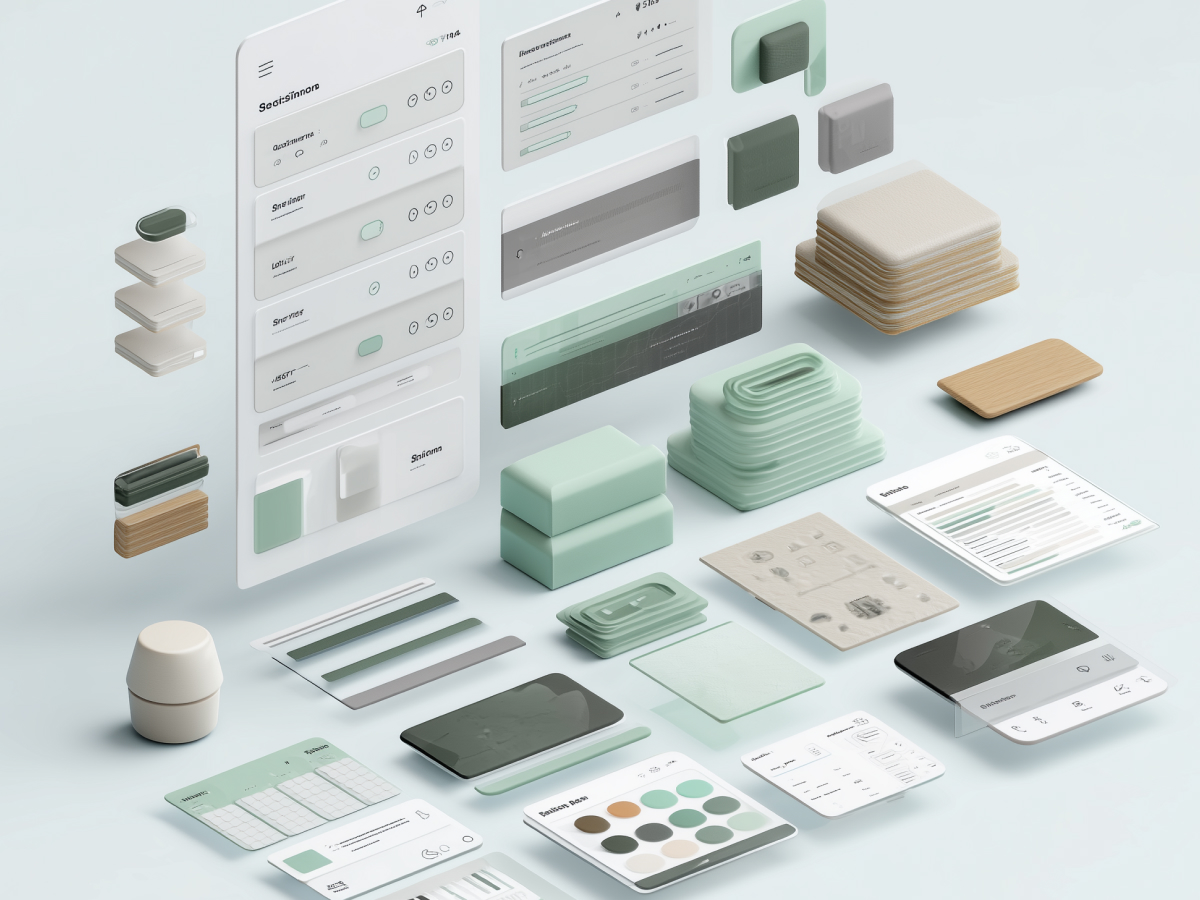
Evolution and importance of design systems
Design systems have changed the way digital products are built. What started as simple style guides has become a key framework for scaling design and development efficiently. A good design system aligns visual identity, user experience, and technical implementation into a single, flexible structure. It includes reusable components, design tokens, and governance models that ensure everything from color usage to layout structure follows consistent standards across all platforms.
This evolution cuts time, reduces repetitive tasks, and keeps teams aligned. When every component, from buttons to navigation elements, has predefined rules and reusable logic, the organization gains speed without losing design integrity. These systems evolve continuously, staying relevant as new technologies and user needs emerge. For executives, a strong design system is a measurable asset. It removes chaos from the design process and allows fast product rollouts while maintaining brand strength and user trust.
The long-term return on such systems is substantial. They reduce development costs, shorten feedback loops, and prevent the need for complete overhauls when introducing new product lines. Consistency across platforms means less time spent on manual adjustments and fewer errors reaching the end user. Design systems also help new teams integrate faster since the rules and components are already in place.
According to a 2019 Figma study, designers using a design system worked 34% faster than those who didn’t. That’s not just a performance bump, it’s a competitive advantage. Faster delivery cycles enable quicker market response and sustainable innovation at scale.
Bridging designer–developer collaboration
Design systems play a critical role in uniting designers and developers under one shared language. Too often, teams lose time clarifying what a single component should look like or how it should behave. A well-designed system removes this friction. Every element, from dropdown menus to modals, comes with clear documentation, design logic, and production-ready code. This ensures that what designers imagine is exactly what developers build.
When structure replaces improvisation, output quality rises. Design intent is preserved from concept to execution. Systems like Netguru’s Silk Design System make this process seamless, turning consistent design into reality. The Silk framework, used for commerce-focused digital products, cuts setup and prototyping time by 50%, saving teams between three to six days during each minimum viable product (MVP) sprint.
For leaders, that efficiency isn’t just internal, it also reflects externally. Customers experience cleaner, more consistent interfaces, while teams roll out updates faster and with fewer bugs. Developers spend less time interpreting designs, and designers spend less time correcting implementations. This synergy frees talent to focus on innovation instead of resolving handoff conflicts.
The deeper value lies in cultural alignment. A shared framework creates accountability and precision. Teams stop debating details and start solving problems. Over time, this collaboration shortens feedback loops, encourages cross-functional learning, and increases the reliability of every product release. A unified system doesn’t just improve productivity, it transforms how organizations think about product creation.
Common misconceptions about design systems
Many leadership teams still misunderstand what a design system truly is. One of the most frequent misconceptions is that design systems only make sense for large organizations with big teams and budgets. The reality is straightforward, any company that produces digital products gains value from structured design consistency. Small teams, in particular, can scale faster when they rely on reusable elements and shared standards instead of rebuilding assets each time a new project starts.
Another misconception is that design systems limit creativity. They don’t. They remove repetition, not imagination. Designers spend less time re-creating basic interface patterns and more time solving meaningful product challenges. The system takes care of the predictable elements, while teams apply creativity where it adds the most business value, vision, user personalization, and innovation.
Many people also mistake design systems for static once-and-done projects. They are living frameworks that evolve over time. Changes in brand identity, technology, or product focus require continuous updates and governance. The most successful companies view their design systems as ongoing initiatives that reflect market trends and user feedback.
For executives, the insights here are practical. A flexible design system doesn’t restrict growth; it accelerates it. It anchors teams around a single version of truth, creating a scalable foundation that supports everything from experimental product ideas to global rollouts. By promoting cross-functional collaboration and long-term efficiency, design systems become a driver of both innovation and stability.
Core components of a design system library
The design system library defines the foundation for consistent interface development. Its strength lies in its building blocks: design tokens, component libraries, and pattern libraries. Design tokens are standardized variables, such as color, typography, and spacing, that ensure uniformity across every product interface. They store visual decisions in code, preventing inconsistencies and simplifying updates.
Component libraries contain reusable elements like buttons, input fields, and cards, each with functional states, hover, focus, active, that make user interactions predictable and accessible. Pattern libraries build on these components to solve recurring design problems at a higher level of structure, such as forms, navigation paths, or content layouts. Together, these assets form a shared ecosystem that both designers and developers can depend on for precision and speed.
A modern design system also includes accessibility guidelines. Every component must communicate its state clearly, whether enabled, selected, or disabled, so that all users can interact effectively, including those using assistive technologies. For businesses, this isn’t just a compliance factor; it improves usability and trust across markets.
Executives should recognize that investing in these components delivers a clear return. As teams scale, a robust library prevents visual drift, reduces rework, and keeps development synchronized. Design tokens and standardized assets simplify governance and accelerate onboarding, making large organizations more agile. When core components are strategically maintained, digital products remain consistent, adaptable, and high-performing across platforms.
Enhancing collaboration through shared libraries
Shared libraries allow design and development teams to work from the same foundation. They hold approved UI components, styles, and variables that align everyone on consistent, up-to-date assets. When teams across departments use the same repository, miscommunication and conflicting versions of components drop sharply. The library becomes a central source of truth that ensures decisions made during design are reflected accurately in code.
Version control is what keeps this process efficient. Every update is tracked, documented, and easily reversible if needed. Clear naming conventions, detailed change logs, and backward compatibility maintain order as systems evolve. Developers and designers can move fast while staying confident that their changes won’t break existing products. Complete documentation adds another layer of reliability, helping teams understand how each component works, when to use it, and how to customize it properly.
Executives should see shared libraries as a business tool, not just a technical feature. They protect brand consistency, reduce wasted effort, and make scaling more predictable. When everyone works from one coherent library, the result is measurable, fewer redesigns, faster sprints, and improved product quality. The system becomes part of the company’s operational rhythm, reducing communication gaps and dependencies that slow output.
Research confirms the payoff. Organizations using shared component libraries experience a 34% boost in design efficiency, and teams working with structured systems like Silk report a 50% reduction in setup time, saving 3–6 days per MVP sprint. Those are efficiencies that directly improve time-to-market and team morale. For leadership, this translates to faster shipping cycles, better alignment across teams, and tangible cost optimization at scale.
Reducing handoff errors with component‑driven design
The handoff between designers and developers is often where inefficiency grows. Component-driven design minimizes that problem by using a modular approach where every piece of the interface is predefined, documented, and reusable. When both design and development rely on the same structured components, translation errors disappear. The result is consistent implementation, faster build cycles, and cleaner final products.
Continuous collaboration further improves this workflow. Instead of working in isolation until handoff, designers and developers collaborate throughout each sprint. They share feedback in real time, catch implementation issues early, and adjust before they become costly. This not only increases speed but also accountability. Everyone involved contributes to maintaining quality from the start rather than resolving inconsistencies at the end.
For executives, adopting a component-driven model is a decision about operational excellence. It reduces the hidden costs of rework, accelerates delivery, and strengthens quality control. The approach scales naturally across teams and locations without requiring constant oversight. It also frees up time previously spent reconciling mismatched design files and broken code, time that can now be used to experiment, improve performance, or expand product scope.
The numbers show the effect clearly. 62% of development teams report spending too much time redoing designs because of communication gaps. With component-driven systems, teams see up to 70% faster development cycles, while Airbnb’s shared component library achieved a 35% reduction in handoff time. These figures reinforce that a methodical, structured approach isn’t just a workflow improvement, it’s a competitive strategy that aligns product design and engineering at every level.
Adopting and scaling design systems
Choosing how to implement a design system defines how quickly and effectively it supports business goals. Organizations generally have three options, adopt, adapt, or create. Each approach carries different levels of effort and customization. Adopting an existing design system provides speed and immediate structure, ideal for smaller teams needing quick results. Adapting a system balances structure with flexibility, allowing teams to modify existing frameworks to match brand identity and workflow. Creating a system from scratch offers maximum control but demands greater time, cost, and long-term maintenance.
The Nielsen Norman Group highlights that these decisions should align with company maturity and product scope. An adaptive model often provides the best balance, combining the foundation of an established framework with brand-specific customization. For example, when teams used the Silk Design System, they reduced setup and prototyping time by 50%, saving 3–6 days during MVP sprints. That kind of efficiency compounds across releases, translating to stronger delivery pipelines and faster innovation cycles.
Scaling a design system requires governance. Clear ownership structures ensure that updates, reviews, and version management follow defined protocols. Teams can operate under centralized, decentralized, or hybrid structures, each suited to different organizational dynamics. Centralized teams maintain consistency and control; decentralized teams ensure flexibility; hybrid setups achieve both when core and product teams collaborate.
From an executive perspective, scaling a design system is about long-term sustainability. It’s not a one-year initiative, it’s infrastructure. Continuous audits, documented versioning (using the MAJOR.MINOR.PATCH model), and regular feedback loops keep systems current without downtime. When implemented effectively, the design system evolves as the organization grows, preventing the need for full reinventions. For leadership, the outcome is clear: reduced technical debt, predictable scaling, faster onboarding, and a consistent user experience at every product level.
Lasting impact of design systems
Design systems have moved beyond being optional tools, they are now a core part of organizational infrastructure for digital product creation. Their most enduring impact is how they unify processes, reduce technical debt, and strengthen brand consistency. A well-maintained system acts as a stable foundation for product delivery, supporting continuous improvement and faster execution across multiple product lines. The benefits compound over time, particularly for organizations operating across many digital platforms or product markets.
Strong design systems free teams to focus on meaningful innovation. Instead of rebuilding standard elements, teams apply their expertise to areas with strategic value, user experience, accessibility, and new feature development. The structured consistency of reusable components also ensures that updates in one area automatically improve others, maintaining performance and efficiency across an expanding ecosystem. For business leaders, this creates a predictable environment for scaling without sacrificing quality or design integrity.
Success with design systems depends on governance and continuous investment. Version control, documented updates, and ongoing audits prevent systems from becoming outdated. Regular feedback loops, between designers, developers, and users, enable quick adaptation to changing business goals and evolving user expectations. This process ensures that the design system remains aligned with corporate strategy rather than lagging behind innovation cycles.
For executives, the long-term value is tangible. A design system reduces duplication, accelerates delivery, and enhances cross-functional collaboration. It ensures that the company’s digital assets evolve together, supporting global consistency and operational precision. The outcome is measurable across both qualitative and financial indicators, faster product launches, lower design overhead, stronger customer experiences, and better alignment between technology and business goals.
Research and industry performance data confirm these outcomes. Organizations implementing structured design systems consistently report shorter development cycles and stronger collaboration across teams. These systems create sustainable frameworks capable of supporting ongoing growth in a digital-first economy. For leadership teams, the conclusion is clear: a well-executed design system is not only a design efficiency measure, it is a long-term strategic asset that enhances both innovation capacity and operational scale.
The bottom line
Design systems have changed how organizations think about digital product creation. They replace guesswork with structure and turn creativity into a scalable process. For business leaders, this shift isn’t just operational, it’s strategic. A strong design system aligns design intent with technical execution, creating consistent, efficient, and future-ready digital experiences.
The investment returns are measurable. Teams move faster, release with more confidence, and spend less time fixing fragmented workflows. The company gains a design infrastructure that supports growth instead of slowing it. As systems evolve through governance, documentation, and feedback, they become long-term assets that strengthen both brand integrity and delivery speed.
Executives should view design systems not as a design initiative but as a core business capability. They reduce waste, increase predictability, and provide the clarity needed to make decisions at scale. In a market where speed and precision define success, a well-built design system delivers both, consistently and sustainably.