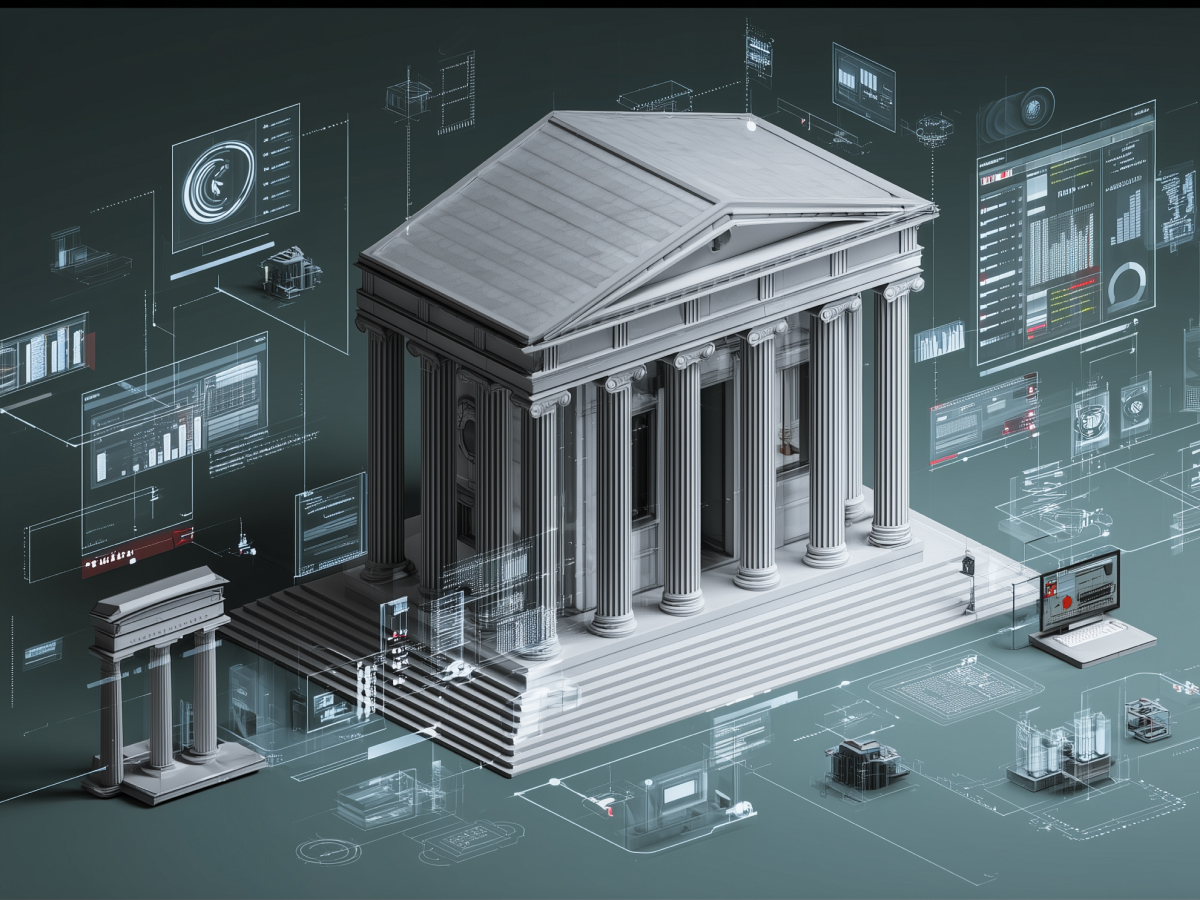
Global cloud infrastructure spending is surging due to rising AI demands
Cloud infrastructure investment is accelerating worldwide. Omdia forecasts a 27% rise in global spending this year, reflecting the intensity of competition among hyperscalers. Amazon, Microsoft, and Google are all racing to expand capacity as AI reshapes what’s possible with data and software. For these companies, cloud infrastructure isn’t just another business unit, it’s the foundation for future economies built on large-scale automation, intelligent systems, and generative applications.
The expansion isn’t just about high-performance compute like GPUs. It covers CPUs, storage systems, and the massive networking capabilities needed to keep AI running efficiently across global regions. This level of demand exposes one clear truth: AI isn’t just influencing the market, it is dictating its direction. When top cloud players commit over $500 billion to AI infrastructure by fiscal year 2026, they are signaling a bet on AI as a long-term economic driver, not a passing trend.
For C-suite leaders, this shift means strategic investment must follow the new realities of AI-driven operations. Prioritizing digital infrastructure is no longer optional; it is now tied directly to competitiveness. Decision-makers should ensure their organizations aren’t merely consumers of cloud-based AI but active participants in shaping how it’s used. This calls for deliberate capital allocation, careful vendor selection, and a deep understanding of AI’s impact on scalability and operating efficiency. The leaders who invest in flexible, AI-ready infrastructure now will define the next phase of business performance and speed.
Efficiency and targeted expansion are the new imperatives for hyperscalers
We’re entering a stage where growth in the cloud sector isn’t just about scale, it’s about precision. As hyperscalers push toward meeting AI’s rising computational demands, efficiency in expansion has become the deciding factor. Power constraints and supply chain bottlenecks are forcing cloud providers to think smarter, not bigger. The market’s focus has shifted toward using existing resources more wisely, optimizing power usage, improving server density, and accelerating deployment cycles without overspending on capacity.
The long-term health of the cloud industry depends on this balance. In the second half of 2025, data center construction rates dropped for the first time in six years because of power and equipment shortages. That slowdown serves as a signal. The companies that succeed in the AI era will be those that can scale responsibly, crafting infrastructure that delivers maximum performance from every watt, component, and data packet.
For senior executives, efficiency can no longer be viewed purely as a cost-management exercise. It’s becoming the key differentiator in a market where excess capacity no longer guarantees competitiveness. The organizations that adopt efficient infrastructure strategies today are building resilience against energy costs, resource scarcity, and operational delays. Strategic precision should define investment decisions, whether that’s choosing data center locations, optimizing AI workloads, or improving energy modeling. This mindset turns infrastructure planning into a long-term competitive weapon rather than a reactive expense.

A project in mind?
Schedule a 30-minute meeting with us.
Senior experts helping you move faster across product, engineering, cloud & AI.
Cloud vendors are increasingly differentiating through enhanced AI agent capabilities
Cloud providers are now entering a new phase of competition, one centered on intelligence rather than infrastructure scale alone. AI agents are becoming essential to how vendors differentiate their offerings. Amazon’s AWS Transform integrates AI agents to drive modernization initiatives, while Microsoft is embedding similar agents in its app modernization and cloud operations. These advancements mark a shift toward enabling enterprises to move from simple AI experimentation to operationalized, enterprise-grade deployment.
This trend isn’t about offering generic AI tools. It’s about embedding AI into the workflows, data environments, and systems that businesses already depend on. For enterprises, seamless integration of AI agents means improved decision-making, reduced operational friction, and faster time-to-value. For hyperscalers, it represents a new currency of differentiation, turning their cloud platforms into intelligent, adaptive environments tailored to business outcomes.
For executives, this shift has strategic importance. Integrating AI agents into existing systems requires more than technical readiness, it demands governance frameworks, data orchestration models, and adaptable deployment pipelines. Companies must focus on ensuring these tools enhance productivity and scalability without introducing complexity that slows growth. Vendors leading in this space are those aligning AI innovation with practical usability for enterprise needs. Smart governance and security around AI integration will separate those who create lasting value from those who deploy short-term, experimental solutions.
Strategic partnerships with key technology providers underscore industry interdependence
The most significant players in cloud computing are deepening their alliances to keep pace with AI’s rapid advancement. At Nvidia’s GTC conference, Google, Microsoft, and AWS all announced expanded partnerships with Nvidia, a clear signal of their shared dependence on the company’s advanced chip architecture to power AI workloads. Nvidia’s GPUs remain central to developing and scaling AI solutions, and this interconnection between the world’s top cloud providers and a single hardware supplier defines a new kind of competitive landscape.
While these collaborations strengthen access to cutting-edge technology, they also reveal the industry’s structural vulnerabilities. Reliance on a limited number of hardware providers introduces potential supply and pricing constraints, which could ripple through the broader cloud ecosystem. At the same time, these partnerships ensure that hyperscalers maintain momentum in AI infrastructure innovation, providing customers with reliable access to the most advanced AI compute systems available.
For C-suite executives, these partnerships should be viewed as both a strategic advantage and a dependency to manage. Working closely with specialized technology providers enables faster innovation, but decision-makers need to build resilience into their infrastructure strategies. This means diversification of key technology suppliers and forward planning around potential supply chain pressures. A balanced partnership model will allow businesses to benefit from specialized hardware capabilities while maintaining control over long-term technological and financial risk exposure.
Infrastructure investments face real-world constraints due to power and equipment limitations
Despite record-breaking investment plans, the expansion of data center infrastructure is encountering practical limits. Power availability and hardware supply shortages have begun to slow progress across the industry. The data confirms this shift, data center construction dropped for the first time in six years during the second half of 2025. This slowdown reflects the strain that rapid AI-driven growth is placing on global energy systems and supply chains. Even hyperscalers, with their vast resources, are now forced to plan expansion more strategically to mitigate these restrictions.
The challenge is no longer about whether companies can invest, it’s about whether they can deploy new infrastructure effectively within existing energy and equipment boundaries. These limitations are pushing cloud providers to double down on technology that improves energy management, optimizes data center design, and accelerates the supply of critical components. Companies that can efficiently navigate these constraints will preserve their growth trajectory while maintaining economic and environmental sustainability.
For C-suite leaders, this development demands a shift in strategic thinking. Infrastructure scalability must now incorporate energy efficiency, supply chain resilience, and operational sustainability as central pillars. Decision-makers should focus on forming partnerships with power suppliers, investing in alternative energy sources, and adopting modular designs that ease deployment pressure. Success in this environment will depend on agility in planning and execution, not just the size of capital expenditure. Long-term competitiveness will come from organizations that build infrastructure strategies capable of adapting to both market and environmental realities.
Key executive takeaways
- AI-fueled cloud expansion demands strategic capital planning: Cloud spending is set to rise 27% this year as hyperscalers like Amazon, Microsoft, and Google invest over $500B in AI infrastructure. Leaders should prioritize long-term investment strategies that align with AI-driven growth to stay competitive.
- Efficiency now defines hyperscaler competitiveness: Power and equipment limits are forcing companies to prioritize smarter, targeted infrastructure expansion. Executives should direct budgets toward energy-efficient systems and data center optimization to sustain growth under resource constraints.
- AI agents are emerging as key differentiators: Vendors are embedding AI agents into workflows to modernize operations and unlock scalable automation. Business leaders should invest in integration frameworks and governance to ensure AI enhances productivity and reliability across systems.
- Partnerships define the new cloud ecosystem: Expanding collaborations with Nvidia show the industry’s reliance on shared AI infrastructure. Executives should balance partnerships with supply chain resilience by diversifying key technology providers to reduce strategic risk.
- Power and supply challenges require rethinking infrastructure: Data center construction has slowed for the first time in six years, revealing real-world limits on scale. Decision-makers should adopt flexible infrastructure strategies focused on energy efficiency, supply chain security, and sustainable growth.

A project in mind?
Schedule a 30-minute meeting with us.
Senior experts helping you move faster across product, engineering, cloud & AI.